
Information About Bucharest
The Ultimate Travel Guide to Romania’s “Little Paris”
Welcome to Bucharest, a dynamic city of fascinating contrasts and untamed energy. From elegant Belle Époque villas and tree-lined boulevards to massive communist-era structures, the Romanian capital offers an unforgettable travel experience. Often overshadowed by other, more famous European capitals, Bucharest has quietly transformed into a vibrant hub of history, nightlife, and culinary excellence.
Population
Bucharest is the largest city in Romania and serves as its cultural, financial, and industrial heart. The city is home to a population of approximately 1.8 million residents within the city limits, with the greater metropolitan area exceeding 2.2 million. This busy capital is a true melting pot of old-world charm and modern innovation. You will find a youthful, progressive energy pulsating through its historic streets, driven heavily by a growing tech sector, a booming cafe culture, and a large, active student population.
Visiting Bucharest
The absolute best time to visit Bucharest is during the spring (April to June) or autumn (September to October). During these transitional months, the weather is beautifully mild, and the city’s numerous parks are awash with vibrant colours. Summers in the capital can be sweltering, with temperatures frequently soaring above 30 degrees Celsius. Winters bring snow and freezing temperatures, but visiting in December offers the unique charm of festive Christmas markets, mulled wine, and a cosy, romantic atmosphere.
Arriving in Bucharest: Airports
Bucharest is primarily served by Henri Coandă International Airport (OTP), commonly referred to by locals as Otopeni. Located about 16 kilometres north of the city centre, it is the busiest airport in Romania and welcomes flights from all major European hubs, as well as several intercontinental destinations.
Navigating from the airport to the city is straightforward. You can take the express bus 783, hop on the direct train to Gara de Nord (the main railway station), or use a ride-sharing app.
Getting Around: Transport Options
Navigating Bucharest is surprisingly easy and highly affordable. The city features a comprehensive public transportation system consisting of the Metro, buses, trams, and trolleybuses.
- The Metro: The Bucharest Metro is the most efficient way to travel long distances across the city, featuring clean, modern stations and trains that run frequently.
- Surface Transport: Buses and trams cover almost every corner of the capital, though traffic during rush hour can slow them down considerably.
- Ride-Sharing: Apps like Uber and Bolt are highly recommended for tourists. They ensure transparent pricing, eliminate language barriers, and a typical ride across the city center rarely costs more than 5 to 10 USD.
- Walking: The central areas, particularly the Old Town and the parks, are incredibly pedestrian-friendly.
Architecture: The “Little Paris” of the East
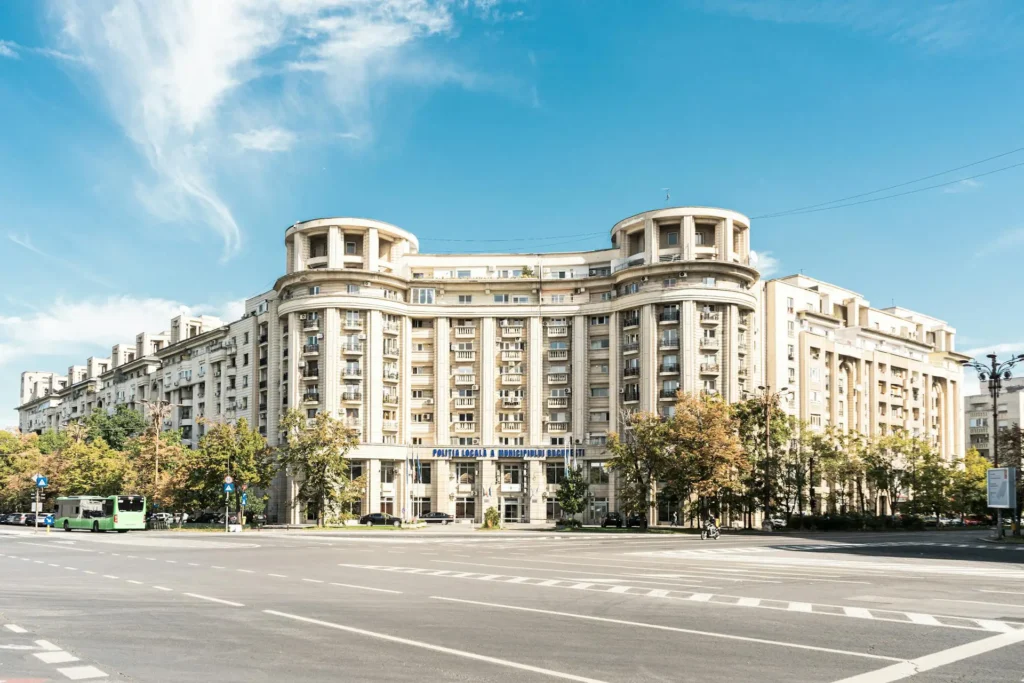
Bucharest’s architecture is a mesmerising study in historical layers. In the early 20th century, the city earned the nickname “Little Paris” due to its elegant French-inspired Belle Époque buildings, wide boulevards, and its very own Triumphal Arch. Following World War II, the communist regime left a massive, heavy footprint. They introduced sweeping Brutalist apartment blocks, imposing civic centres, and reshaped the skyline. Today, these drastically different historical layers are interspersed with sleek, modern glass-and-steel office buildings, creating a uniquely eclectic urban landscape.
Top 10 Visitor Attractions
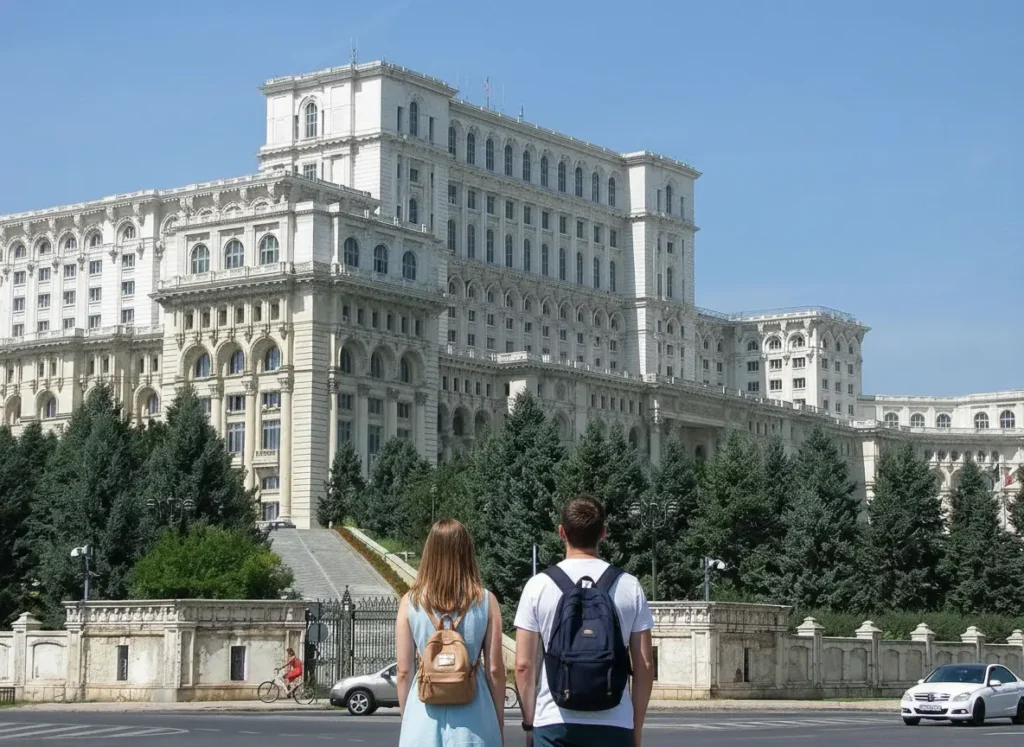
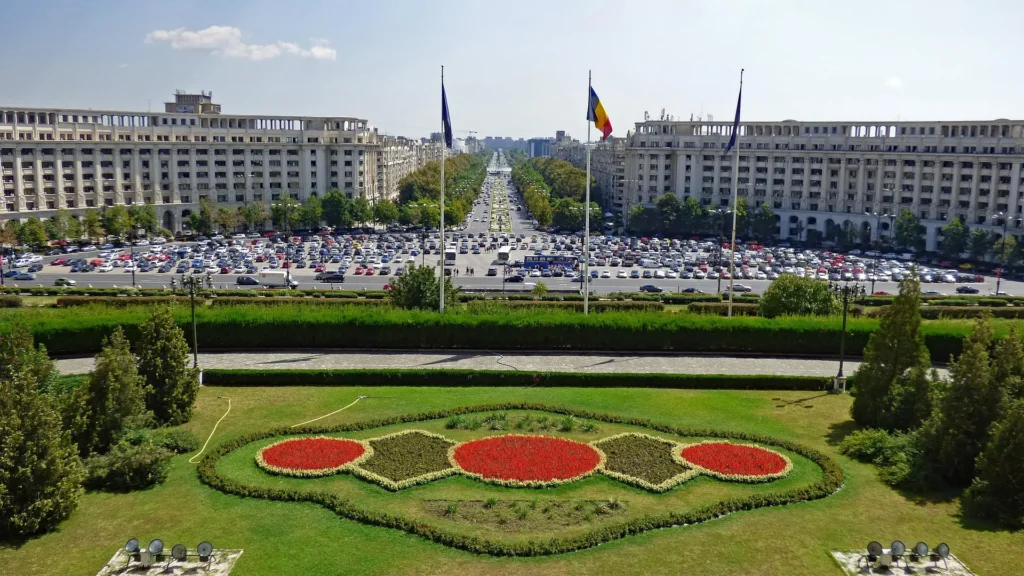
- Palace of the Parliament: As the heaviest building in the world, this colossal communist-era structure boasts over a thousand opulent rooms and remains an absolute must-see for its sheer, mind-boggling scale.
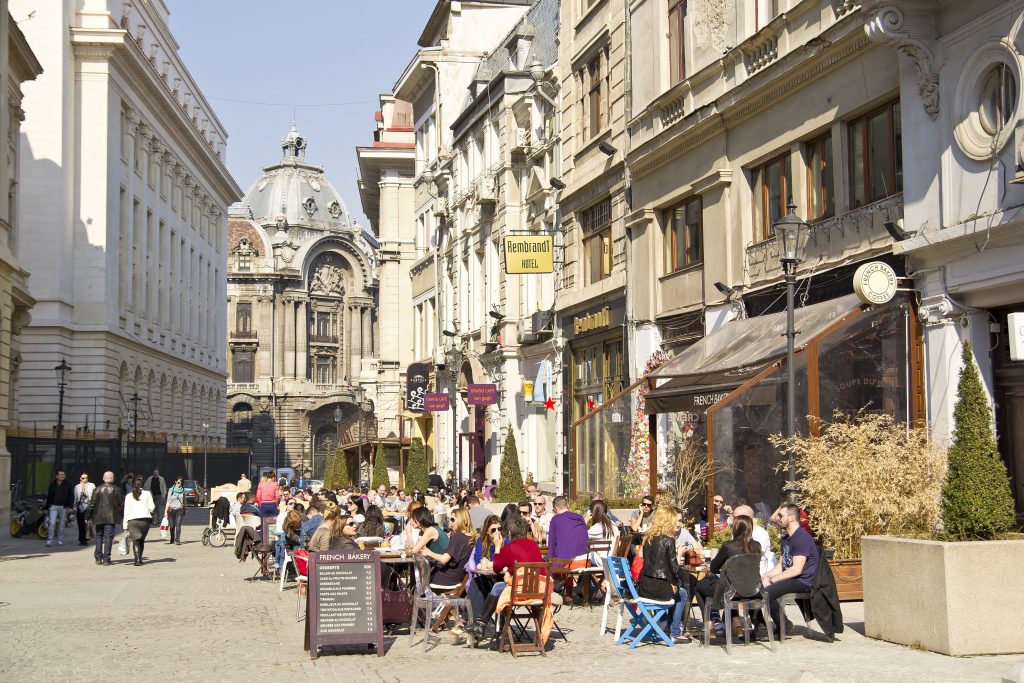
- Bucharest Old Town (Centrul Vechi): This vibrant, pedestrian-only historical centre is packed with restored 19th-century buildings that now house lively bars, cafes, and boutique shops.
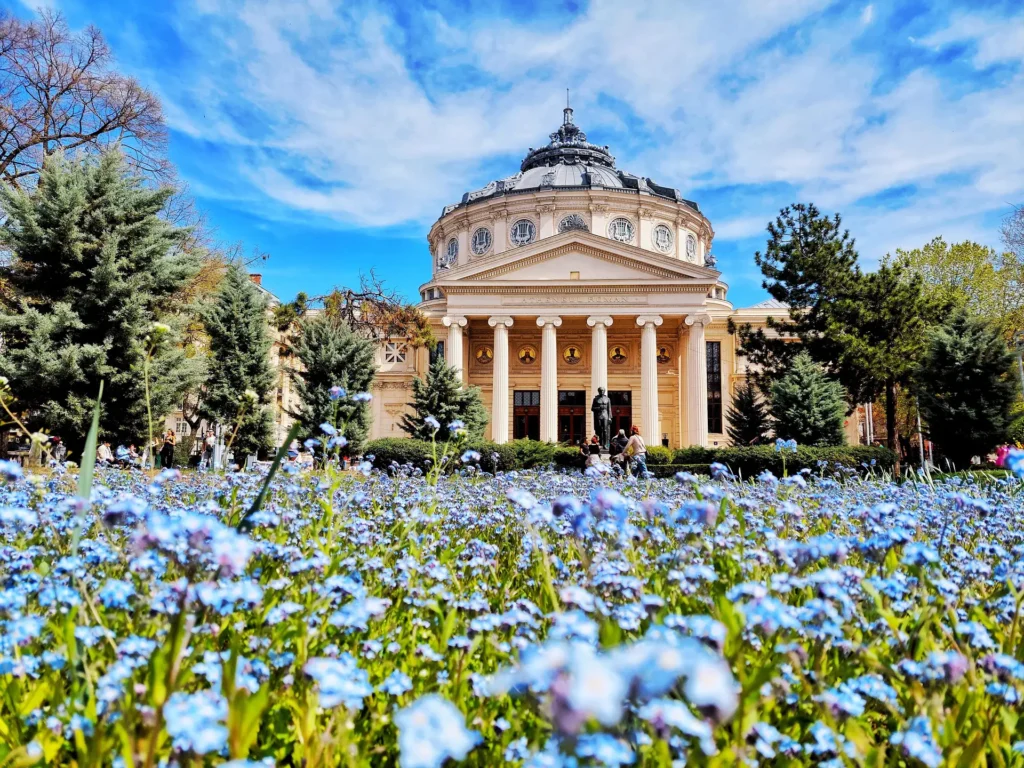
- Romanian Athenaeum: This breathtaking neoclassical concert hall is the heart of Romania’s classical music scene, featuring a stunningly ornate interior and a massive fresco depicting Romanian history.
- Dimitrie Gusti National Village Museum: Located in Herăstrău Park, this massive open-air museum showcases hundreds of authentic traditional Romanian village homes, churches, and mills relocated from across the country.
- King Mihai I Park (formerly Herăstrău Park): A sprawling green oasis built around a large lake, perfect for boat rides, renting bicycles, and peaceful afternoon walks away from the city noise.
- Arcul de Triumf: Modelled directly after its famous Parisian counterpart, this towering triumphal arch celebrates Romania’s independence and its World War I victories.
- Stavropoleos Monastery: Hidden away in the busy Old Town, this tiny 18th-century Eastern Orthodox monastery is a masterpiece of the intricate, heavily ornamented Brâncovenesc architectural style.
- National Museum of Art of Romania: Housed in the former Royal Palace, this museum features an impressive, expansive collection of medieval and modern Romanian art, as well as European masterpieces.
- Spring Palace (Palatul Primăverii): The former opulent residence of communist dictator Nicolae Ceaușescu offers a fascinating, slightly eerie glimpse into his lavish lifestyle.
- Carturesti Carusel: Often cited as one of the most beautiful bookstores in the world, this stunningly restored 19th-century building is a paradise for book lovers and photographers alike.
Culture and Arts
Bucharest boasts a thriving cultural scene that bridges its deep historical roots with contemporary European trends. The city is home to numerous majestic theaters, art galleries, and cultural institutes. Classical music lovers will appreciate the George Enescu Philharmonic Orchestra, while contemporary art enthusiasts can explore independent galleries and creative hubs scattered throughout the city. Throughout the year, Bucharest hosts various international film festivals, massive music events, and vibrant street art exhibitions that keep the cultural calendar packed.
Bucharest Accommodation on The Map
Food: A Taste of Romania
Romanian cuisine is a hearty, comforting blend of Balkan, Turkish, and Central European influences. Traditional dishes are often meat-heavy and deeply flavorful. Sarmale (minced pork meat wrapped in pickled cabbage leaves) is widely considered the national dish, often served alongside polenta and a generous dollop of sour cream. Another beloved street food favorite is Mici (skinless grilled garlic sausages), best enjoyed with mustard and a cold beer. For dessert, you absolutely must try Papanași, a delicious, calorie-dense fried dough pastry shaped like a donut, smothered in sweet fruit jam and soft cheese.
Wining and Dining
The dining scene in Bucharest has exploded over the last decade, offering everything from traditional rustic taverns to high-end, Michelin-worthy gastronomy. While you will find fantastic international cuisine, taking time to explore local Romanian restaurants is highly recommended to understand the culture. Romania is also one of Europe’s oldest and largest wine producers. Be sure to order a bottle of Fetească Neagră, a robust and fruity local red wine, to accompany your dinner. A nice three-course meal for two at a mid-range restaurant is very affordable, typically costing around 40 to 60 USD.
Nightlife: A City That Never Sleeps
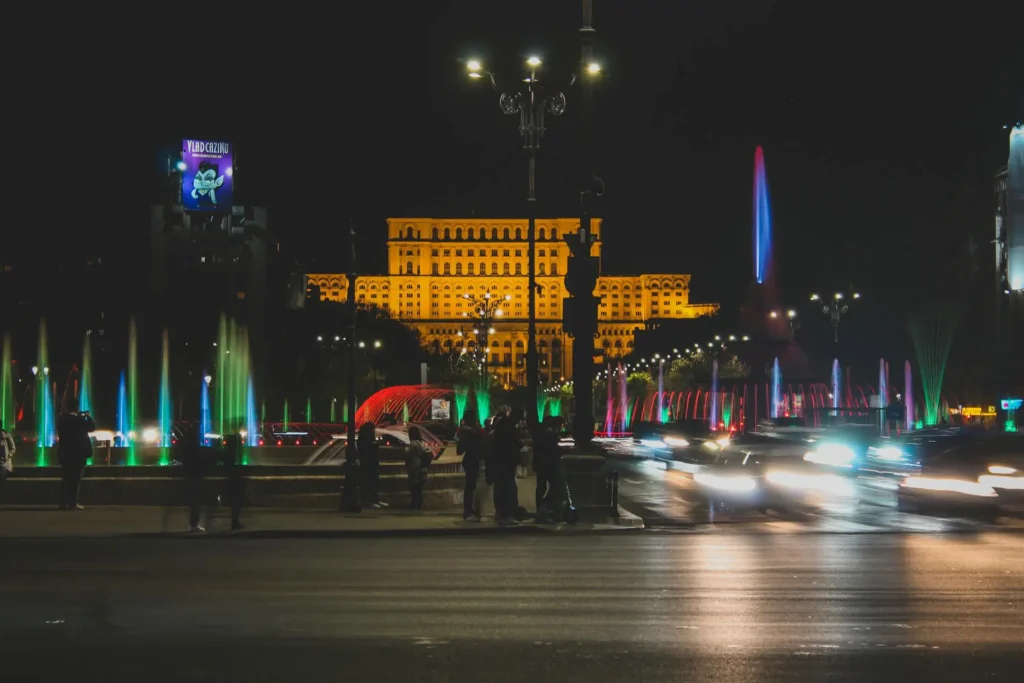
If there is one thing Bucharest is famous for across the continent, it is its legendary nightlife. The Old Town is the undisputed epicentre of after-dark entertainment, featuring hundreds of bars, pubs, and clubs packed into a tight grid of pedestrian streets. Whether you are looking for a quiet craft beer taproom, a sophisticated rooftop cocktail lounge, or a pulsating nightclub that stays open until sunrise, you will find it here. The city is also a major European hotspot for electronic and techno music, frequently hosting massive warehouse parties just outside the city centre.
Useful Information for Travellers
- Currency: Romania uses the Romanian Leu (RON). While credit cards are widely accepted almost everywhere, it is always a good idea to carry a small amount of cash for tips, street food, or small purchases at local markets.
- Language: The official language is Romanian, a Romance language with Latin roots similar to Italian and Spanish. However, English is widely spoken, especially among younger people and in the service industry, making it very easy for tourists to communicate.
- Safety: Bucharest is generally a very safe city for tourists, with violent crime being extremely rare. As with any major capital, simply be mindful of your belongings in crowded tourist areas and on public transport to avoid opportunistic pickpockets.
- Connectivity: Romania boasts some of the fastest broadband internet speeds in the world. You will find reliable, incredibly fast, and free Wi-Fi in almost all cafes, restaurants, hotels, and even in some public parks.