

Flight Tickets for Weekend Getaways
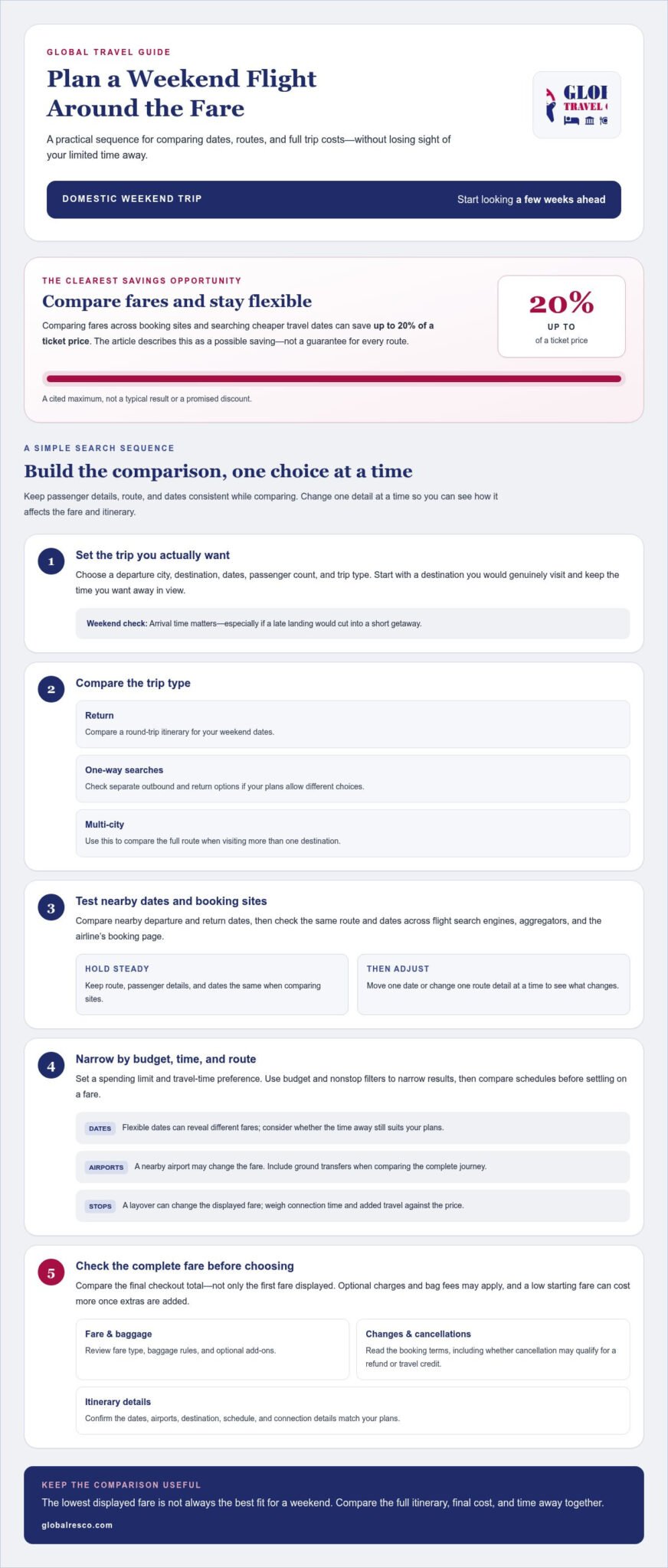
For a domestic weekend getaway, start looking for flight tickets at least a few weeks ahead. Comparing fares across booking sites and staying flexible with your travel dates can save up to 20% of a ticket price.
It’s easy to assume a short trip will be simple to book, but weekend flight tickets can be less convenient when you’re tied to specific days or times. A little planning helps you compare options without losing sight of the time you want to spend away.
This guide explains how to search for lower fares, choose dates and routes that suit a quick getaway, and compare the details behind each option. You’ll also learn how prices can shift, what to consider before booking, and how to make planning your trip more straightforward.
Key Takeaways
- Learn how to spot unusually low fares and weigh the trade-offs before booking flight tickets.
- Compare one-way, return, flexible-date, and multi-city searches to find routes that fit a short break.
- Use nonstop and budget filters to narrow results, then consider whether a stopover is worth the added travel time.
- Read price patterns with season and destination in mind, so you can choose dates that better suit your budget.
- Compare the full itinerary and fare details across booking options before deciding where to book.
How do you find cheap error fares?
Compare fares, then open the airline or travel provider’s booking details. Take a closer look at error fares and unusually low offers before you pay.
Booking Through Airlines and Travel Providers
Compare the same route and dates on an airline’s booking page and in travel provider results. Check the full itinerary, fare type, baggage rules, change options, and total shown at checkout. Basic economy generally has tighter limits than standard economy, while included options vary by airline. A low starting fare may cost more once you add extras.
For Frontier’s GoWild Pass, compare its displayed price with the travel terms and the cost of any add-ons you need. Review which dates and routes the terms allow, then consider whether those choices suit your plans. A pass is useful only when its rules and final trip costs work for your itinerary.
Change, cancellation, and refund policies depend on the fare and booking terms. Read the conditions before paying, including how changes are handled and whether a cancellation may qualify for a refund or travel credit.

Flexible Dates and Destinations
Start with a destination guide or a shortlist of places you’d enjoy, then search dates around your preferred weekend. The listed flight suggestions use the cheapest round-trip flight tickets to popular destinations within the next 3 months. Treat those results as comparison points, not as a reason to choose a trip that doesn’t fit your schedule.
Compare nearby departure and return dates, then weigh the fare against time away and other trip costs. Flexible destinations can reveal a better fit: search several cities you’d genuinely visit instead of focusing on one airport pair. Keep trip length and arrival time in view, especially when a late landing cuts into a short getaway.
Nearby Airports, Layovers, and Flight Ticket Prices
Changing dates, choosing a nearby airport, or accepting a layover can change the displayed fare. Compare the complete journey, including airport transfers and time between connections, before choosing the lowest result. The cheapest option may not suit a weekend if it adds a long detour or difficult ground travel.
Hidden-city ticketing means leaving at a stopover and skipping the ticketed final destination. This doesn’t match the booked itinerary, so avoid it if you need to complete every flight segment.
Before buying flight tickets, review baggage charges, seat or other optional add-ons, and the fare’s change and cancellation terms. Compare the final checkout total, not just the first fare displayed. For an unusually low offer, confirm that the dates, airports, and destination match your plans.
How can I find cheap flight tickets for a weekend getaway?
Start with your route, then compare trip types and nearby dates. For domestic trips, booking a few weeks ahead is usually recommended.
One-Way, Return, and Multi-City Searches
Choose the search type that matches your plans. A return search covers a round trip, while one-way searches let you compare separate outbound and return options. For a weekend away, check both before deciding. If you’ll visit more than one destination, use a multi-city search to compare the full route rather than piecing together separate trips.
Keep the same dates and airports while comparing results. Then adjust one detail at a time, such as moving the return flight or adding a stop. This makes it easier to see how each change affects the itinerary and fare. A multi-city option is most useful when every stop is part of your plan.
Flight Search Engines and Aggregators
Compare flight search engines and travel aggregators using the same route, passenger details, and dates. Searching cheaper travel dates across aggregators can save up to 20% of flight tickets prices. Treat that figure as a reason to compare, not as a promise for every route. Check the itinerary details, not only the first fare shown.
These examples show why matching dates and trip details matters when comparing search results.

Route and Trip-Type Searches
Search your preferred departure city and destination first, then compare alternative routes that still fit your plans. These are different city pairs, so use them as route examples, not direct fare comparisons.
For a short break, weigh total travel time alongside the fare. A lower-priced route with inconvenient departure times may leave less time at your destination. Compare the outbound and return schedules before choosing, especially when your weekend dates are fixed.
Search Forms and Itinerary Types
Most flight search forms ask for a departure city, destination, dates, passenger count, and trip type. Enter those details carefully before comparing results. Try a return search first, then test one-way or multi-city options if your plans allow different airports or stops. Keeping passenger details consistent makes results easier to compare.
For Frontier, enter your route and dates, then review the displayed itinerary and flight tickets details. Compare the option with other results for the same dates. Check the total for your chosen itinerary, including any selected extras, before deciding. This final comparison keeps your search aligned with your schedule and budget.
If you’re still choosing where to go, use destination guides to explore places that fit your route and trip plans.
Filtering by nonstop flights and budget
Set a spending limit and travel-time preference before narrowing the results. Then use the calendar and flight filters to compare options that suit your weekend.
Budget Filters
Enter your maximum fare after choosing the route, dates, and passenger details. Treat the budget filter as a way to remove options above your limit, not as a complete comparison of trip costs. Sort the remaining results by price, then review the schedule and fare details before deciding.
Compare like with like. Suggested fares include required taxes and fees for one adult in Economy, while optional charges and bag fees may apply. A low displayed fare may not include the extras you plan to select, so check the total for your itinerary before booking.
Use the calendar to test nearby departure and return dates. Move one date at a time, keeping the route and passenger details unchanged. This shows whether shifting the weekend changes the available fares.
Set a practical ceiling, then consider whether a higher fare saves meaningful time. For a short break, an inconvenient arrival or return can reduce time at your destination. Compare the price difference with the schedule, baggage needs, and any optional extras you’d choose.
Nonstop and Direct Flight Filters

Select the nonstop filter to remove itineraries with scheduled stops. This helps when you want a simpler route or have limited time away. Compare departure and arrival times as well as fares: a nonstop flight that arrives late may leave you with less useful time than another schedule.
Search engines may distinguish “nonstop” from “direct.” A nonstop itinerary has no intermediate stop, while a direct itinerary may include a stop without requiring a flight change. Read each result’s route details, because the label alone may not show how the journey unfolds.
Try the search in two passes. First, apply the nonstop filter and sort within your budget. Then remove the filter to compare connecting itineraries, checking total journey time and stop locations.
Before choosing, confirm the departure airport, arrival airport, travel dates, and number of stops in the final itinerary. These checks help ensure your chosen result matches your calendar and preferred travel pace.
Flight price insights and historical trends
For domestic flights, booking at least a few weeks ahead is usually recommended for lower fares. For cheap international flights, booking a few months ahead is usually recommended. These are useful starting points, not fixed deadlines. The best time also depends on the route, travel season, and how firmly your dates are set.
Past prices can help you compare, but a previous fare doesn’t set today’s price. The route stayed the same, but the travel month differed. Use examples like these to spot seasonal variation, not to predict an exact fare.
To assess an international route, search the same cities across several travel months. Keep passenger count, cabin, and trip type consistent. Then compare fares, departure times, stops, and total travel time. A New York-London search, for instance, may show different options for March and May. Comparing those results gives you a clearer view of how dates shape the itinerary and price.
Price alerts can help you follow a route without repeating the same search. Set an alert for your departure city, destination, and preferred dates. If your schedule allows, track nearby dates separately. When an alert arrives, compare the new result with your saved itinerary. Check that the fare still meets your needs, including route, cabin, and travel times.
Make each comparison useful by changing one factor at a time. First, search your preferred dates. Next, shift the outbound date while keeping the return date fixed. Then test a different return date or travel month. This helps identify which change affects the result. For an international trip, compare March and May as separate searches, as in the New York-London example.
Don’t treat a single low fare as a complete trend. Compare the same route and trip details across searches, and note whether the result changes with the month or schedule. A fare alert is most useful when it tracks a route you’re genuinely willing to take. For example, an alert for New York-London won’t help if your actual destination is elsewhere.
Before booking, review the current itinerary instead of relying on a saved alert or older example. Confirm the travel dates, airports, cabin, stops, and displayed fare.
Comparing airfare prices across booking sites
Compare identical routes and travel details across booking sites before choosing an itinerary. A lower displayed fare may reflect different dates, stops, cabin details, or included services. For a useful comparison, keep your route, passenger count, travel dates, and cabin consistent. Then review what each result includes before deciding.
A San Diego-Malaga example searched in December showed a difference between two available fares. The comparison also showed how that gap could add up for a family of four. The practical lesson is simple: compare the same journey, then multiply any per-person difference by everyone travelling. A result for one traveller won’t show the group’s complete cost.
Suggested fares include required taxes and fees for one adult in Economy. Optional charges and bag fees may apply. Check whether each result uses the same cabin and passenger details, then review baggage and selected extras. A fare that looks lower at first may not remain the cheaper option after you choose the services you need.
Use a consistent comparison process:
- Enter the same departure and arrival cities on each site.
- Match travel dates, trip type, passenger count, and cabin.
- Compare stops, departure times, arrival times, and total travel time.
- Review taxes, baggage, and optional charges before comparing totals.
- Open the final itinerary and confirm each flight segment.
For example, if one San Diego-Malaga result includes a connection and another has a different schedule, compare the full trip, not just the first fare shown. Check the layover location, connection time, and arrival time. Those details can affect how practical an option feels, especially when coordinating several travellers or planning a short stay.
Booking sites can display different itineraries or organize results differently. Repeat your search with matching details, and note which result best fits your plans. If one option appears cheaper, check its baggage allowance, fare conditions, and any extra services you’d select. Compare the final itinerary details, not just the initial search result.
For a family of four, review the total for all travellers and confirm that everyone’s itinerary matches. A per-person comparison can be useful, but it won’t capture the group’s complete spending. Keep a short note of the route, dates, cabin, and included services while comparing, so you can spot differences quickly.
Once you’ve matched the details, explore flight options to continue planning your route and travel dates.
GLOBAL TRAVEL GUIDE: GLOBAL TRAVEL GUIDE
GLOBAL TRAVEL GUIDE helps you turn fare comparisons into a broader trip plan. Its destination guides share information about countries and cities, including transport, places to stay, attractions, and things to do. Explore these details after narrowing your route, especially when weighing arrival times against your plans. A quick look at local transport and attractions can help you decide whether a late arrival suits your getaway.
You can also explore flight information, Accommodation options, and Tours & Tickets as you plan. These resources help you consider your flight alongside the rest of the trip, rather than in isolation. Match your destination and travel dates with the activities you want to enjoy, then build a getaway around your plans. Visit globalresco.com to continue planning.
Make Your Next Weekend Count
Choose the kind of break you want before settling on a destination. A city stay, a concert weekend, or time outdoors can each call for different arrival times and plans. Let the experience guide your final choices, so your flight tickets fit the getaway rather than define it.
Once you have a destination in mind, bring your travel dates and priorities together. Think about how much time you want on the ground, what you’d like to do, and which parts of planning still need attention. A clear plan makes it easier to move from browsing options to preparing for your trip.
GLOBAL TRAVEL GUIDE can be a useful next step as you turn your plans into a trip. Explore its travel resources, or reach out with your travel-planning questions. Contact GLOBAL TRAVEL GUIDE and start shaping a weekend away that feels right for you.
Frequently Asked Questions
Are there big differences in search engine prices?
Yes, results can differ because search engines may display different itineraries, fare types, or booking options. Compare the same airports, dates, passenger details, and cabin to make a fair price comparison. Then open the fare details and check what’s included. If two results look similar, compare departure times and route details too. A lower starting figure may represent a different travel plan, not a better price for the same trip.
How can I find last-minute flight deals?
For a last-minute trip, search several nearby departure times and destinations, then compare the complete itinerary. Check both return and one-way options if your plans allow. Focus on routes you can reach easily and dates you can actually travel. Compare arrival times and stop locations alongside the fare. A low-priced result has little value if its schedule leaves too little time for your plans or requires inconvenient connections.
How do I know if baggage is included in the final flight price?
Open the fare conditions and baggage details before choosing a result. Look separately for cabin baggage, checked baggage, and any quantity or size limits shown. Compare the displayed fare with the total after selecting the baggage you need. For example, a traveller bringing only a small cabin bag should compare that allowance with a traveller checking a suitcase. Don’t assume two fares include the same baggage simply because their names look alike.
What is a hacker fare and how do I find them?
A hacker fare combines two one-way fares from different airlines. Search the outbound and return legs separately, then compare their combined itinerary with a standard return search. Check airports, departure times, and connection arrangements for each direction. This approach can reveal a different combination of options, but you need to review both bookings carefully. Keep each flight’s details together so you can follow the separate itineraries.
Why compare multiple flight comparison sites?
Comparing sites can reveal different combinations of routes, schedules, and fare details for the same trip. One result may show a connection that another search doesn’t display prominently. Use matching dates and passenger details, then compare the itinerary itself instead of ranking results by the first figure alone. This is especially useful if your preferred departure time is limited or you’re coordinating travel with someone on a separate booking.
Which days and months have the cheapest flight tickets?
No single weekday or month is cheapest for every route. Prices depend on the destination, travel season, schedule, and how many suitable alternatives are available for your dates. Search a calendar view and compare nearby departure and return dates, keeping the route fixed. Then compare months separately if your plans allow. Flexible travellers can use these comparisons to find a date that balances the fare with useful arrival and departure times.
Are flight tickets cheaper when booked directly with airlines?
Not always. The same journey can appear differently on airline booking pages and travel provider sites, so compare matching dates, airports, fare types, and baggage needs. Check the total at the final booking step, not just the first result. Also read the fare conditions before choosing, since differences in included services can affect which option suits you. Booking directly is one option to compare, not an automatic sign of a lower fare.