
Information About Switzerland
Perhaps most famous for chocolate and fine jewellery, visitors should not be surprised to discover that Switzerland has far far more to offer.
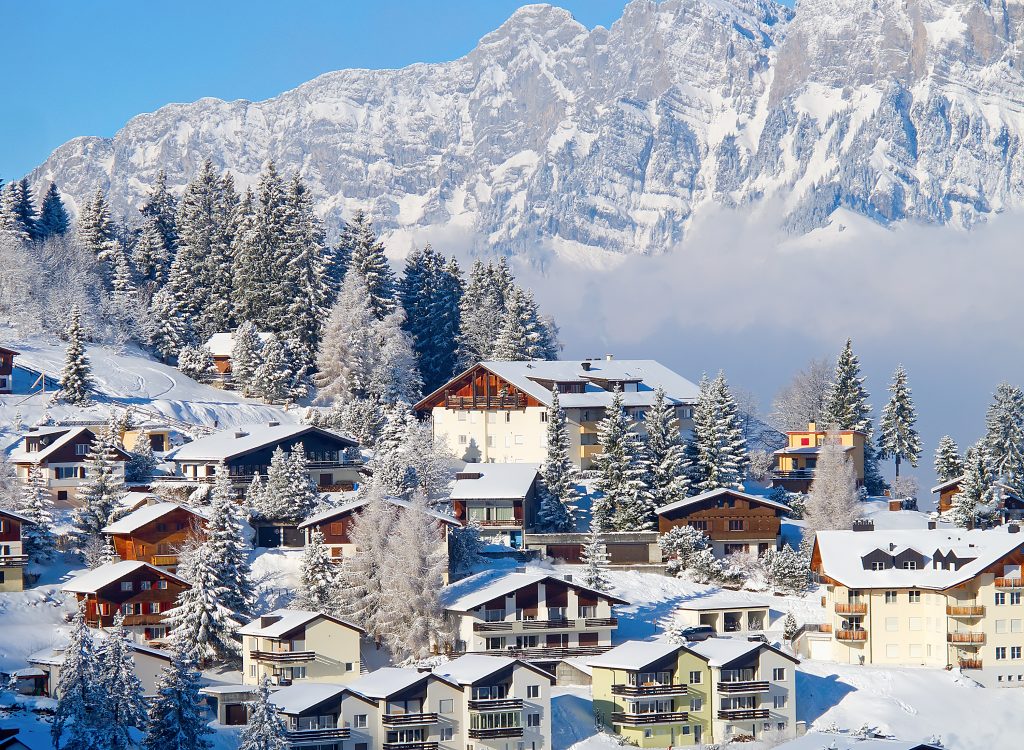
A world famous skiing and winter sport destination, Switzerland also boasts numerous fine, historic cities and excellent tourist infrastructure.
Switzerland is a compact, mountainous country in the heart of Europe, known for its lakes, Alpine scenery, efficient public transport, and high quality of life. It blends four distinct cultures: German, French, Italian, and Romansh, into one federal state with modern cities, traditional villages, and world‑class outdoors.
Population
- Switzerland has about 9 million inhabitants
- The country is highly urbanized, with major population centers around Zurich, Geneva, Basel, Lausanne, Bern, and the Lake Geneva and Lake Zurich regions.
- It also has many smaller towns and villages scattered in valleys and on mountain slopes, giving visitors easy access to nature.
Languages
- Switzerland has four official national languages: German, French, Italian, and Romansh
- Swiss German (a group of Alemannic dialects) is the most widely spoken; around two‑thirds of residents live in predominantly German‑speaking cantons.
- French is spoken mainly in the western part of the country (e.g., Geneva, Lausanne, Neuchâtel), Italian in Ticino and parts of southern Graubünden, and Romansh in parts of southeastern Graubünden.
- English is widely understood in cities, tourist areas, hotels, railways, and many restaurants, so visitors can usually get by easily.
Transport options
- Public transport:
- Switzerland is famous for its dense, punctual and integrated public transport network, combining trains, trams, buses, boats, and cable cars.
- The Swiss Federal Railways and regional rail lines connect almost all cities, towns, and many villages.
- Timetables are coordinated; a single ticket or travel pass often covers trains, buses, and boats in a region.
- Scenic trains:
- Special panoramic routes such as the Glacier Express, Bernina Express, GoldenPass, and Gotthard Panorama lines provide comfortable, scenic travel through the Alps.
- Local transport in cities:
- Cities like Zurich, Geneva, Basel, Bern, and Lausanne have excellent tram and bus systems, and often local trains and lake boats.
- Many urban areas are very walkable and bicycle‑friendly.
- Driving:
- Motorways are well maintained; to use them you typically need to buy a vignette (toll sticker) for your car.
- Mountain roads can be narrow, winding, and occasionally affected by snow or closures; in winter you may need winter tires and/or chains in some areas.
- Airports:
- Main international gateways are Zurich Airport, Geneva Airport, and EuroAirport Basel–Mulhouse–Freiburg, with additional regional airports.
- From these airports, trains connect quickly to most destinations.
Climate
- Switzerland has a temperate, continental‑influenced climate that varies strongly with altitude and region.
- Lowlands and lakes (e.g., Zurich, Geneva, Basel):
- Warm summers with average daytime highs around 22–28 °C; occasionally hotter during heatwaves.
- Winters are cool, often 0–7 °C, with some frost and occasional snow.
- Alpine regions:
- Cooler year‑round; summers are pleasantly mild and ideal for hiking.
- Winters are cold with reliable snow at higher elevations, making Switzerland one of Europe’s premier ski and snowboard destinations.
- Southern Switzerland (Ticino):
- Has a more Mediterranean feel, with milder winters and warm, sunny summers.
- Weather can change quickly in the mountains; visitors should bring layers, a waterproof jacket, and good footwear, even in summer.
Top 10 Visitor Attractions & Things to Do in Switzerland
Below are ten of the most popular and iconic attractions or activities in Switzerland.
- Matterhorn & Zermatt
Visit the car‑free mountain village of Zermatt and admire or ski beneath the jagged Matterhorn, one of the world’s most famous peaks. - Jungfraujoch – Top of Europe (Bernese Oberland)
Ride cogwheel trains through dramatic alpine scenery to Jungfraujoch, a high‑altitude station with year‑round snow, ice palace tunnels, and sweeping glacier views. - Lake Geneva & the city of Geneva
Stroll along Lake Geneva’s promenades, see the Jet d’Eau fountain, explore international organizations like the UN, and enjoy the city’s cosmopolitan dining and museums. - Lucerne & Mount Pilatus / Rigi
Wander Lucerne’s medieval old town and wooden Chapel Bridge, then take a boat and cogwheel train or cable car up Pilatus or Rigi for panoramic views over the lake and Alps. - The Rhine Falls (near Schaffhausen)
Experience the power of Europe’s largest waterfall, where platforms and boat trips bring you close to thundering cascades of the Rhine River. - The Bernese Oberland (Interlaken, Lauterbrunnen, Grindelwald, Mürren)
Base yourself in Interlaken or a nearby village to hike, paraglide, take cable cars to mountain peaks, and explore glacier‑carved valleys like Lauterbrunnen with its many waterfalls. - The Glacier Express (from Zermatt to St. Moritz / Chur)
Board this famous panoramic train to cross deep valleys, high viaducts, and mountain passes in a comfortable, slow journey linking major Alpine resorts. - Château de Chillon (Montreux, Lake Geneva)
Tour the beautifully preserved Chillon Castle, a lakeside fortress near Montreux with centuries of history, vaulted halls, and stunning views across Lake Geneva. - Zurich old town & Lake Zurich region
Explore Zurich’s charming historic center with its churches and narrow lanes, then relax on a lake cruise, swim in summer lidos, or visit world‑class museums and shops. - Lugano & the Ticino region
Enjoy a taste of the Mediterranean in Italian‑speaking Ticino, combining palm‑lined lakeshores, mountain viewpoints like Monte Brè or Monte San Salvatore, and Italian‑influenced food and culture.
Zoom in and scroll to see lots of accommodation at your destination