
Travel destinations for culture, islands and Australia’s Red Centre
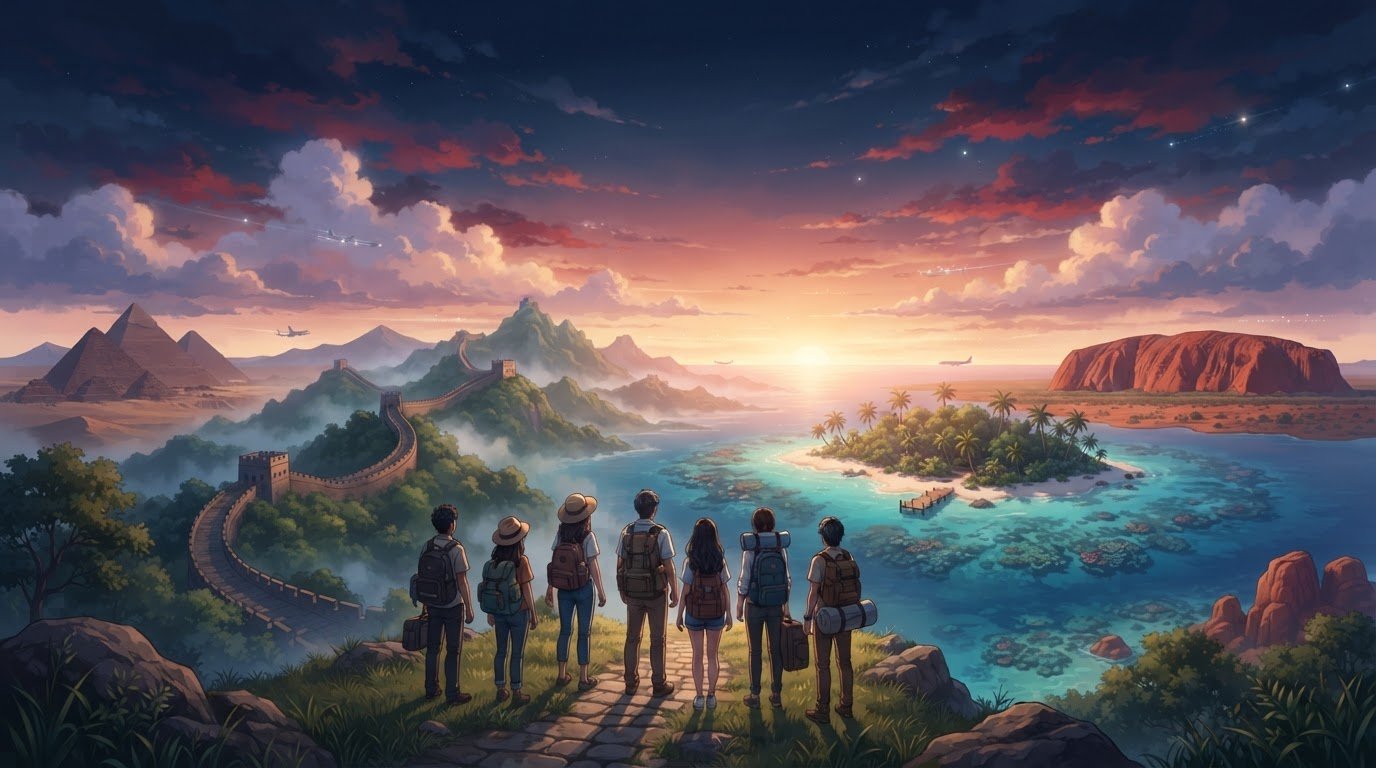
The best travel destinations depend on the experience you want. Explore historic landmarks such as the Pyramids of Giza and the Great Wall of China, unwind on island beaches, or head into Australia’s Red Centre for dramatic outback scenery. For a varied trip, pair a country or city that interests you with activities suited to your pace. This guide brings together ideas ranging from ancient sites and cultural cities to tropical islands and Uluru.
Choosing where to go can feel like the hardest part of planning, especially when every destination offers something different. Explore ideas by country, city, and experience to compare cultural highlights, beach escapes, and outdoor adventures. Destination-specific details can help you picture what each place offers and start shaping a trip that suits you.
Key Takeaways
- Match historic landmarks and cultural experiences to the kind of trip you want, from ancient sites to lively cities.
- Compare destinations by country and city to find experiences that fit your route, interests and pace.
- Look beyond the shoreline when choosing an island escape, with reefs, wildlife and local experiences adding variety.
- Plan time in Australia’s Red Centre around its striking landscapes and outdoor adventures, including the area around Uluru.
- Use destination-specific guides to shape practical plans for individual places, from what to see to how to organize your visit.
1. Historic landmarks and cultural experiences
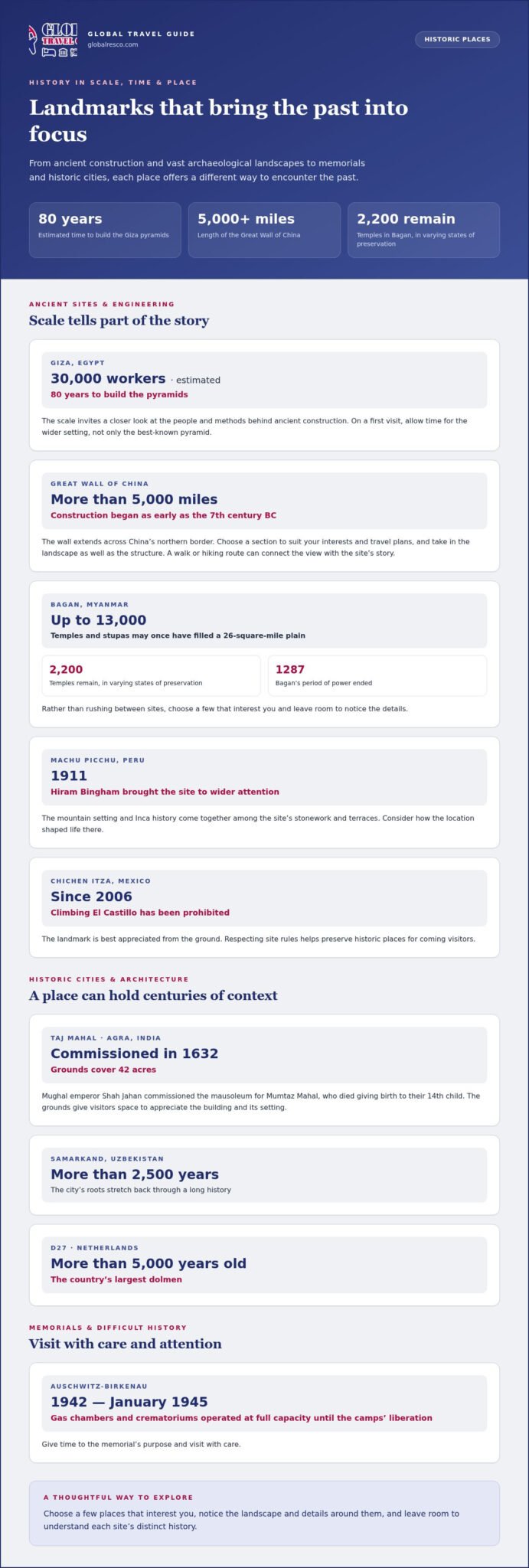
Cultural and historical destinations bring local history into focus through architecture, archaeology, and memorials. At Giza, Egypt, the pyramids were built by an estimated 30,000 workers over 80 years. Their scale makes the site a striking place to consider the people and methods behind ancient construction. For a first visit, allow time to take in the wider setting, not only the best-known pyramid.
The Great Wall of China offers a different way to experience history. Construction began as early as the 7th century BC, and the wall extends more than 5,000 miles across China’s northern border. Choose a section based on your interests and travel plans, then take in the landscape as well as the structure. This is one of those places where a walk or hiking route can connect the view with the story of the site.
In Peru, Machu Picchu combines a dramatic mountain setting with Inca history. American historian Hiram Bingham brought the site to wider attention in 1911. Travelers can explore its stonework and terraces while considering how the location shaped life there. At Chichen Itza in Mexico, El Castillo is another landmark best appreciated from the ground: climbing the pyramid has been prohibited since 2006. Respecting site rules helps preserve these places for coming visitors.
Bagan, in Myanmar, shows how a historic landscape can hold many landmarks at once. It may once have contained as many as 13,000 temples and stupas across a plain stretching 26 square miles. Bagan’s period of power ended in 1287, and 2,200 temples remain in varying states of preservation. Rather than rushing between sites, choose a few that interest you and leave room to notice the details. The range of structures makes Bagan definitely worth considering for travelers drawn to ancient history.
For cultural and historic cities, consider Agra, India, and Samarkand, Uzbekistan. Mughal emperor Shah Jahan commissioned the Taj Mahal in Agra in 1632 as a mausoleum for Mumtaz Mahal, who died giving birth to their 14th child. Its grounds cover 42 acres, giving visitors space to appreciate the building and its setting. Samarkand has roots stretching back more than 2,500 years, making its long history part of the city experience.
Historic sites can also tell difficult stories. At Auschwitz-Birkenau, gas chambers and crematoriums operated at full capacity from 1942 until the camps’ liberation in January 1945. Visit with care and give time to the memorial’s purpose. In the Netherlands, D27, the country’s largest dolmen, is more than 5,000 years old. These places show how a beautiful landmark, an archaeological site, or a memorial can each offer a distinct way to understand the past.
2. Destinations by country and city
For 2026, choose a city or country by the experience you want, rather than chasing a single “best” list. Consider Amsterdam for a compact city break, Cappadocia for sunrise views, or Victoria Falls for a landmark shared by Zambia and Zimbabwe. Each choice offers a different way to plan your days and understand a place.
For a first international city trip, Amsterdam or Paris can be appealing starting points. An eight-hour layover in Amsterdam may offer a brief introduction to the city, while a longer stay gives you more time to explore at a gentler pace. Paris is divided into twenty arrondissements, so grouping nearby sights by district can make your visit easier to plan.
Architecture can shape a city break as much as museums or famous squares. In Ferrara, Italy, a seven-story circular concrete tower was once the heart of the Eridania distillery. The unusual structure adds a modern industrial detail to a city known for historic architecture. In the Andes foothills, a church and monastery showcase examples of 1960s modernist design, offering a different contrast between buildings and landscape.
For a city trip built around a distinctive activity, plan your itinerary around the experience. In Cappadocia, the author watched sunrise hot-air balloons from hotel terraces for four mornings. Repeated early starts like these can influence where you stay and how you plan the rest of each day. In Antigua, Guatemala, climbing Acatenango is described as an overnight hike, so set aside time for the outing rather than treating it as a quick city excursion.
Vientiane, Laos, offers a useful example of planning beyond the city center. Buddha Park lies 25 kilometers by road from central Vientiane, or 15 kilometers in a straight line. The difference shows why route planning matters: road distance reflects the journey you’ll actually take. Pairing a city visit with a nearby attraction can add variety, while leaving enough time for transport.
Amsterdam also works as a short stop on a broader international itinerary. The family behind one travel account usually spends one to two days there during a layover, while an eight-hour stop can still provide a good feel for the city. Choose a few priorities, such as architecture or a neighborhood walk, instead of trying to see everything. For more ideas by country and city, explore this GLOBAL TRAVEL GUIDE as you shape your route.
The right pace depends on the stop you have, not just the destination. An 8-hour layover in Amsterdam can give the family a good feel for the city, while the family usually spends 1-2 days there during a layover. Use the shorter window for a focused visit and keep the plan flexible; a longer stay gives more room to explore without packing every moment. In either case, choosing priorities in advance can help make the time feel purposeful.
For a sunrise-focused stay in Cappadocia, the author watched the hot-air balloons from hotel terraces for 4 mornings. That repeated early start is a reminder to consider the rhythm of an activity when choosing where to stay and how to arrange the day. Build in time to enjoy the setting, rather than treating a memorable experience as a brief stop between other plans.
3. Island destinations and beaches
These are country-level estimates, not beach-specific prices. Your daily spending depends on accommodation, meals, transport, and activities.
Choose an island by the kind of ocean experience you want. The San Blas Islands in Panama are described as a group of 365 islands, making them a strong option for travelers drawn to island scenery and beach time. In Palau, Jellyfish Lake is described as 12,000 years old, offering a distinctive natural setting beyond a standard seaside visit. Build your plan around the activities that matter most, then allow time to enjoy the surroundings.
For a reef-focused escape, consider Australia’s Great Barrier Reef. It stretches more than 1,600 miles along the eastern coast and comprises 2,900 reefs and 900 islands. That scale means you can plan around different coastal areas and experiences. Start by choosing whether you want time on the water, island scenery, or a mix of both, then organize your stay around that priority.
Bora Bora offers a more focused island getaway in French Polynesia. It lies approximately 160 miles from Tahiti, so consider how the island fits into your wider route. If beaches are your favorite part of a trip, leave unplanned time for the shoreline instead of filling every day with excursions. The same approach works for other ocean destinations: choose a central base that suits your activities and keep travel between stays manageable.
For wildlife encounters, Roatán in Honduras has a marine sciences facility at Anthony’s Key Resort. Its natural lagoon covers 2 acres and is home to more than two dozen Atlantic Bottlenose dolphins. This gives visitors a specific marine-life experience alongside the island’s beaches. Before choosing a stay, decide whether reef activities, wildlife, or quiet beach time will shape most of your days.
Affordable beach holidays depend on more than a country-level daily budget. Use these figures as a starting point for comparing destinations, then consider how your accommodation’s location, meals, transport, and paid activities may shape your itinerary. Staying near the places you plan to visit can reduce time spent traveling between the beach and other activities.
A simple planning sequence can help narrow your options: choose an island or coastal area, decide on your main experience, then select a convenient base. For example, compare San Blas for island scenery, Palau for Jellyfish Lake, and Roatán for marine life. If you’ve enjoyed a particular kind of beach trip before, use what you liked to guide your next ocean escape.
4. Outback experiences in Australia’s Red Centre
For beaches, consider an island or coastal destination; for nature, look at Australia’s Red Centre or the Great Ocean Road. Historic cities are a natural fit for cultural experiences, while nightlife depends on the city and neighborhoods you choose. Match your destination to the main reason for your trip, as each option offers a different experience.
When visiting the Red Centre, plan for remote routes, outdoor activities, and conditions on your travel dates. Read current travel advisories for the specific area and activity before finalizing your plans, as guidance can vary by location and time.
Uluru makes a natural starting point for exploring this region. Kata Tjuta and Mount Connor are landmarks to consider when exploring the Uluru region. These named landmarks offer distinct points of interest for a day built around the outback landscape. Plan your route around the places you most want to see, then give each stop enough time to enjoy its setting.
For an active adventure, a three-mile hike before sunrise is one example of an adventurous travel day. An early start changes the pace of the outing and leaves more daylight for other activities. Consider how the hike fits into your wider itinerary, especially if you’re also planning city visits, hotel stays, or long drives.
Nature-focused travelers can also compare the Red Centre with the Great Ocean Road. The 12 Apostles are a highlight of that coastal drive, giving the route a different feel from Uluru’s inland landscape. Both options suit travelers seeking stunning scenery, but they call for different trip plans. Choose the Red Centre for outback landmarks, or the coast for a drive shaped by ocean views.
Cultural and food experiences can add another dimension to an Australia itinerary. Combine a landscape-focused stop with time in a city, where local food and cultural attractions can balance outdoor adventures. If you’re comparing Australia with Europe, think about the trip you want: a city break, a road journey, or a nature-focused stay. That choice will shape where you stay and how you divide your days.
To make the trip feel manageable, choose one main experience first. For example, set Uluru and Kata Tjuta as the focus, then plan the route around those landmarks. Or build a coastal itinerary around the 12 Apostles. This simple step helps turn an amazing landscape into a practical plan, with room for scenery, activities, and time to pause.
A wider Australia itinerary can pair inland scenery with a very different landscape: the Great Barrier Reef stretches for 1800 miles off the coast of northeast tropical Queensland, Australia. That contrast can help travelers decide whether to focus on outback landmarks, reef-side experiences, or a mix, while allowing time to plan between regions.
Australia ranked 21st in the family’s destination ranking. For a sense of how an early start can shape an outdoor day, the author’s Indian Nose hike at Lake Atitlan in Guatemala required a 3:30am wakeup. Consider sleep, effort, and the rest of the day’s plans when choosing a pre-sunrise outing in the Red Centre. A realistic schedule leaves space to enjoy the scenery rather than rushing from one stop to the next.
5. Destination-specific travel guides
For families, couples, and solo travelers, the right destination depends on pace and interests. Families might plan around Angkor Wat or an easy-to-organize city stay, while couples may enjoy Iceland’s Blue Lagoon. Solo travelers can choose a destination that suits their preferred activities and way of getting around.
Seasonal choices depend on the experience you want and local conditions. Huanglong in China is recommended in October, while Iceland’s Blue Lagoon offers naturally heated water between 98 and 102 degrees Fahrenheit. Use a destination guide to match the season with your plans, then arrange activities around the places you most want to see.
Visa, passport, and entry requirements depend on your passport nationality, destination, transit points, and trip length. Before departure, consult the destination’s official immigration guidance and your government’s travel advice for current rules.
For local customs and transport, read guidance for each stop rather than assuming the same habits apply throughout a country. Angkor Wat visitors in Cambodia are advised to claim a viewing spot well before sunrise for an unobstructed view, so plan your transport and arrival time around the early start.
Destination-specific guides also help compare different kinds of days. The Pacific Coast Highway route from San Francisco to Big Sur follows a 90-mile stretch of California coastline. That makes it a clear choice for travelers who want a road journey, while a mountain or national park visit can center the trip on outdoor scenery. In America, Sequoia National Park is a distinct option for travelers inspired by nature and the living landscape.
For a shorter outing, Iceland’s Blue Lagoon is 45 minutes outside Reykjavík. Its water is naturally heated to 98-102 degrees Fahrenheit, making it a defined stop to pair with time in the city. By contrast, the Dead Sea lies approximately 1,410 feet below sea level, a striking geographic feature to consider when planning a visit.
Some guides help set expectations for activity and effort. At Machu Picchu, 400 daily spots are available to hike Huayna Picchu, so the climb needs to be part of your advance planning. At Petra, the route to the Monastery is an hour-long climb up 800 steps. These details help travelers choose experiences that match their energy, schedule, and interests.
Make your guide useful by noting four things: the season, the main sights, local transport, and any entry requirements for your route. For a destination-by-destination starting point, explore the Global Travel Guide and shape an itinerary around the experiences that matter to you.
GLOBAL TRAVEL GUIDE: Global Travel Guide
GLOBAL TRAVEL GUIDE helps turn destination ideas into practical trip plans. Use its country and city information to compare places, attractions, transport, and things to do before deciding where to go. It’s especially useful once you’ve narrowed down your interests and are ready to plan your next steps.
Explore Tours & Tickets for activities, alongside flight information and accommodation options, as you organize your itinerary. Whether you’re planning a cultural city break, an island escape, or an outback adventure, these resources can help bring your plans together around your chosen destination.
Start planning with the GLOBAL TRAVEL GUIDE website.
Turn your travel ideas into a plan
Your next trip doesn’t need to include everything. Choose the experience you most want, then shape an itinerary around a pace, places, and practical details that suit you. A clear starting point makes it easier to turn inspiration into decisions about where to go and what to do.
GLOBAL TRAVEL GUIDE helps you keep planning with destination information, Tours & Tickets, and flight options. When you’re ready to compare travel destinations, use these resources to explore the places you’re considering and plan experiences and arrangements for your trip.
Take the next step at GLOBAL TRAVEL GUIDE. Your next memorable journey can start with one well-chosen idea.
Frequently Asked Questions
What are the most popular travel destinations in the United States?
Well-known U.S. options include Boston for history, Austin for its city atmosphere, Memphis for music, and Nashville for live entertainment. For a nature-focused trip, consider national parks and scenic drives. Choose a base that suits your main interests, then group nearby attractions to reduce time spent crossing a large country. A city break suits visitors looking for cultural activities, while a road trip offers more flexibility between regions.
What are the best travel destinations by season and weather?
Huanglong in China is recommended for an October visit. The material does not provide broader comparisons of destinations or weather by season.
What safety risks and travel advisories should visitors know about?
Respect site rules: climbing El Castillo at Chichen Itza has been prohibited since 2006. At Auschwitz-Birkenau, visit with care and give time to the memorial’s purpose.