
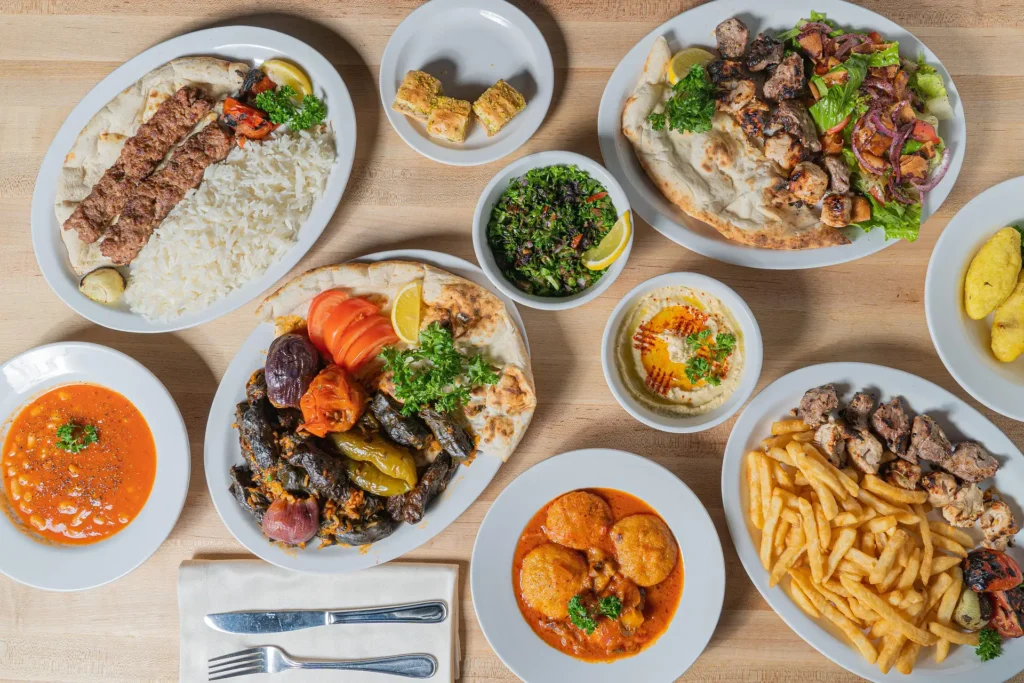
Turkish Food – East Meets West
Turkish food captivates us with its vibrant colors, rich aromas, and centuries-old culinary traditions. As a bridge between Europe and Asia, Turkish food offers a harmonious blend of Mediterranean freshness, Middle Eastern spices, and Central Asian techniques.
In this article, we explore the core ingredients, define the essence of Turkish food, and highlight five famous dishes that represent its character.
Key Ingredients in Turkish Food
- Olive Oil & Fresh Produce
- Yogurt & Dairy
Along the Aegean and Mediterranean coasts including Turkey, extra-virgin olive oil forms the backbone of salads, meze, and vegetable dishes, elevating simple ingredients like tomatoes, cucumbers, eggplants, and peppers.
Yogurt isn’t just a condiment; it is an essential ingredient. For cold soups like yayla çorbası and creamy dips such as cacık, yogurt balances spice and adds tangy depth.
- Legumes & Grains
Lentils, chickpeas, and bulgur wheat appear in stews, pilafs, and vegetarian mains. Red lentil soup (mercimek çorbası) and bulgur salad (kısır) showcase how simple pantry staples become flavourful comfort foods.
- Spices & Herbs
Sumac, paprika, cumin, mint, and oregano provide subtle warmth without overpowering. Aromatic herbs like dill and parsley enliven everything from stuffed vegetables (dolma) to fresh meze plates.
- Meats & Seafood
Lamb and beef feature prominently in kebabs and stews, while the Aegean and Black Sea coasts celebrate fresh seafood—grilled calamari, anchovy pilafs, and sea bass baked in salt crust.
The Essence of Turkish Food
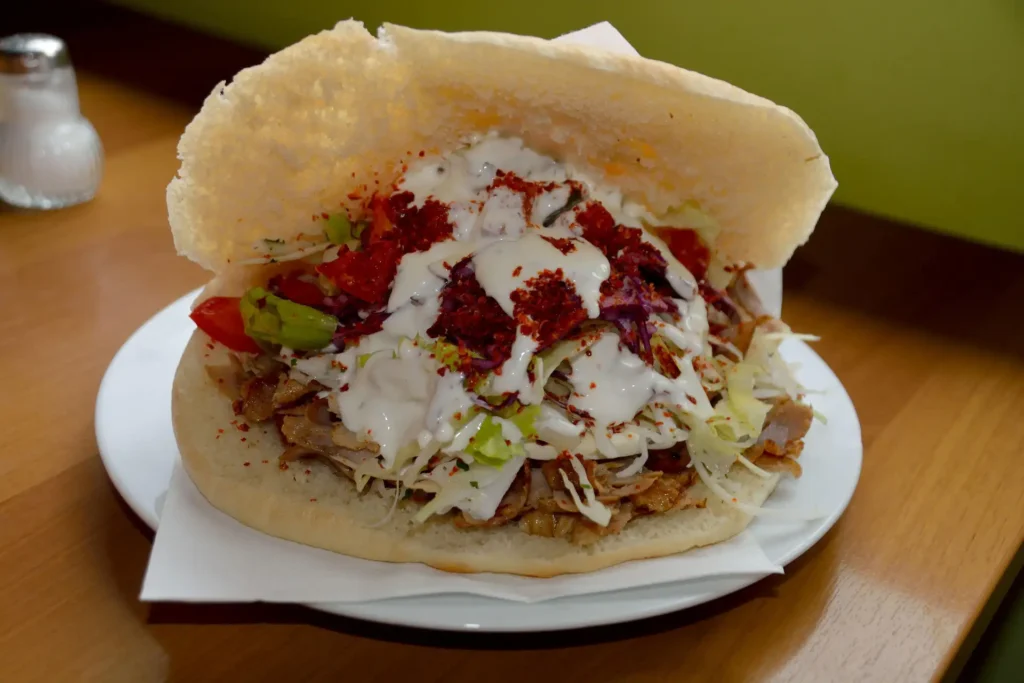
At its core, Turkish food emphasizes balance and hospitality. Meals are communal experiences meant to be shared, often beginning with an array of meze (small plates) designed to awaken the palate. The cuisine draws on regional diversity: the olive-oil-driven dishes of the west, the spice-laden fare of the southeast, and the dairy specialties of Anatolia’s highlands. Seasonal cooking reigns supreme: spring asparagus with egg yolk, summer tomatoes in olive oil, autumn pomegranate molasses, and winter şerbet (spiced fruit drink). This deep respect for ingredient provenance and harmony of flavors is one of the reasons why Turkish food continues to enchant food lovers worldwide.
5 Famous Turkish Dishes
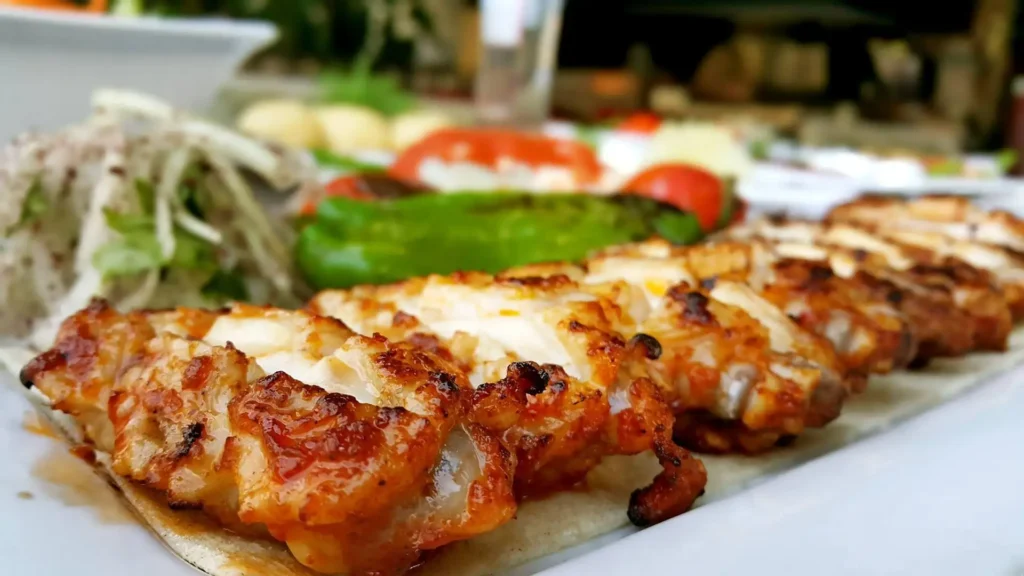
- Döner Kebab: Thinly sliced, marinated meat stacked on a vertical spit and roasted to order, served in flatbread with salad and spicy sauces.
- Baklava: Layers of ultra-thin phyllo pastry filled with ground pistachios or walnuts, soaked in fragrant sugar-lemon syrup.
- Mantı : Tiny handmade dumplings stuffed with seasoned lamb or beef, boiled and drizzled with garlic-yogurt and melted butter with paprika.
- İskender Kebab: Named after its inventor, this dish features sliced döner on top of pide bread, bathed in tomato sauce and melted sheep’s butter, with yogurt on the side.
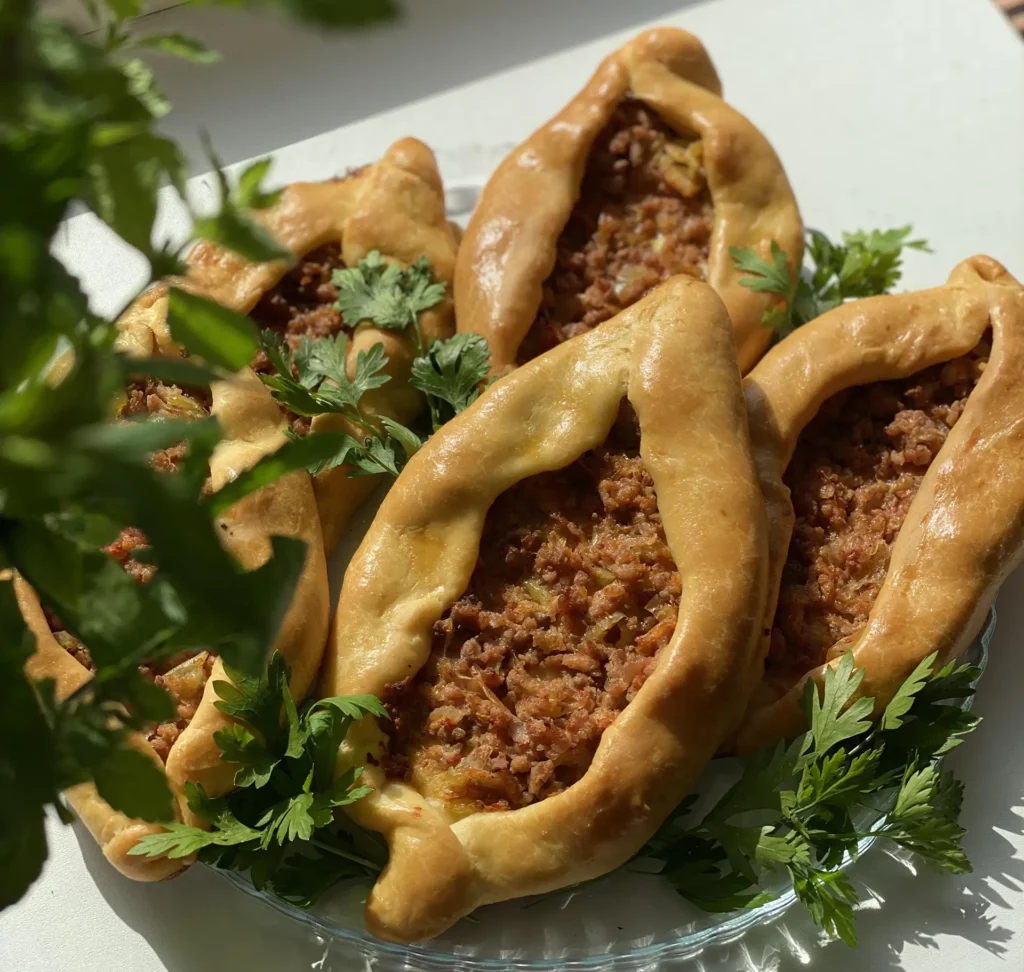
- Pide – Often called “Turkish pizza,” this boat-shaped flatbread is topped with minced meat, cheese, eggs, or spinach and baked until golden.
Turkish Food Today
In the bustling Istanbul streets teeming with food stalls as well as in the family-run eateries in Anatolian villages, Turkish food remains a testament to centuries of cultural exchange and culinary innovation. By using fresh ingredients, time-honored cooking methods, and shared dining experiences, the palates of locals and visitors are satisfied.
.Summary of Turkish food
- Turkish food blends Mediterranean, Middle Eastern, and Central Asian influences.
- Core ingredients include olive oil, yogurt, legumes, grains, spices, meats, and seafood.
- The essence lies in balance, seasonality, and communal dining.
- Iconic dishes like döner kebab, baklava, mantı, İskender kebab, and pide showcase its diversity.
- Embracing Turkish culinary traditions offers a flavorful journey through history and culture.
Enjoy your Turkish food journey!