
Hiroshima and Nagasaki – Recovery from Nuclear Horror
The Legacy, Tragedy, and Rebirth of Hiroshima and Nagasaki
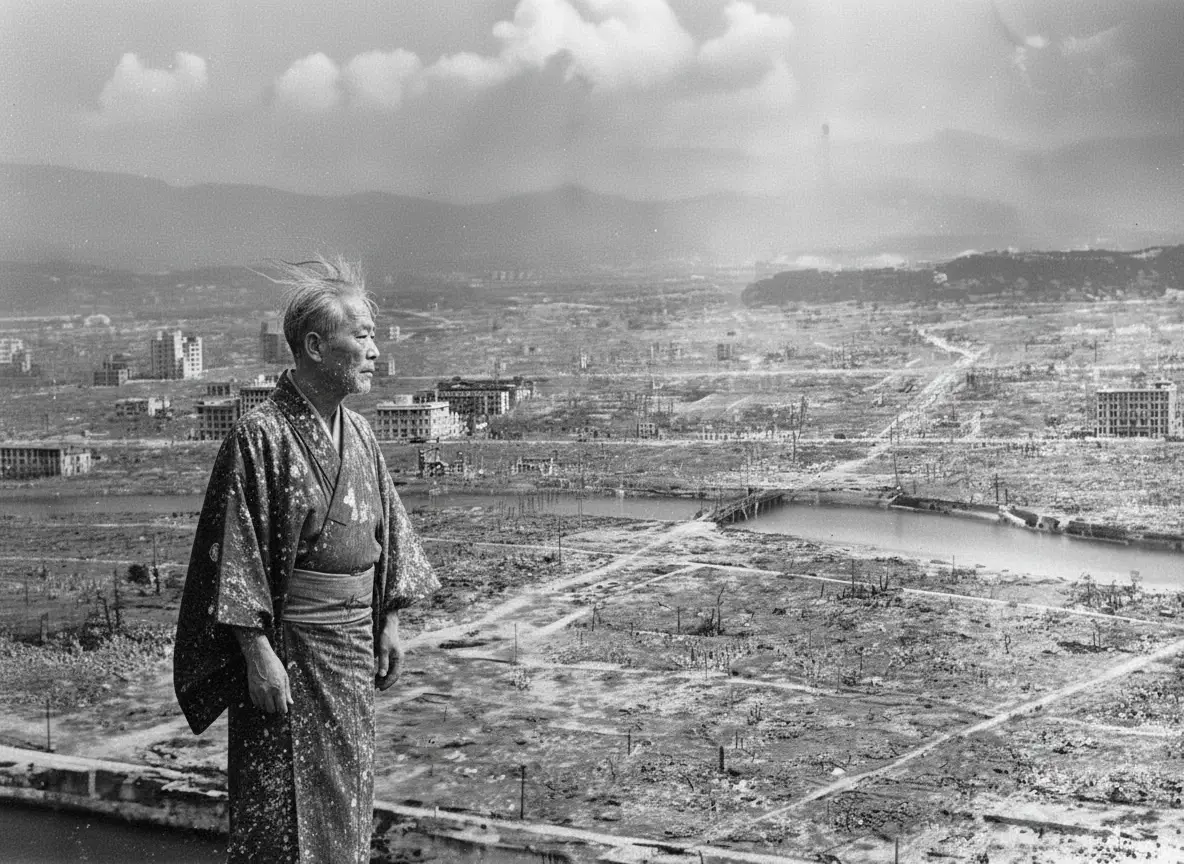
In the waning days of World War II, the trajectory of human history was irrevocably altered by a blinding flash of light. In August 1945, the cities of Hiroshima and Nagasaki became the first, and to this day, the only targets of nuclear weapons in warfare. The devastation unleashed upon these two Japanese cities ushered the world into the Atomic Age, leaving behind a legacy of immense suffering, fierce moral debate, and ultimately, a profound message of peace.
The decision by US President Harry Truman to use the atomic bomb resulted in a huge number of civilian casualties, widespread devastation and horrific human suffering. This is the only time that a nuclear weapon has ever been unleashed on human targets. Was there any justification for its use?
To understand the world we live in today, we must look back at the ashes of Hiroshima and Nagasaki, the agony of their people, and the astonishing resilience that allowed them to rebuild.
The Days When Everything Changed Forever
The morning of August 6, 1945, began like any other in Hiroshima, a busy industrial and military hub. At 8:15 AM, an American B-29 bomber named the Enola Gay dropped “Little Boy,” a uranium-235 atomic bomb. It detonated approximately 1,900 feet above the city center. In a fraction of a microsecond, the temperature at the hypocenter reached millions of degrees, creating a fireball that swallowed the sky.
Three days later, on August 9, a second B-29 named Bockscar carried a plutonium implosion device dubbed “Fat Man.” The primary target, Kokura, was obscured by clouds, leading the crew to their secondary target: Nagasaki. At 11:02 AM, the bomb exploded over the Urakami Valley, an industrial area that also housed the largest Catholic cathedral in East Asia.
In a matter of minutes Hiroshima and Nagasaki were blown off the map, hundreds of thousands of people killed and injured, lives destroyed and untold suffering caused.
Destruction, Suffering, and the Death Toll
The physical destruction in both cities defied human comprehension. The explosions generated three distinct waves of devastation: an intense thermal flash, an immense blast wave, and deadly ionizing radiation.
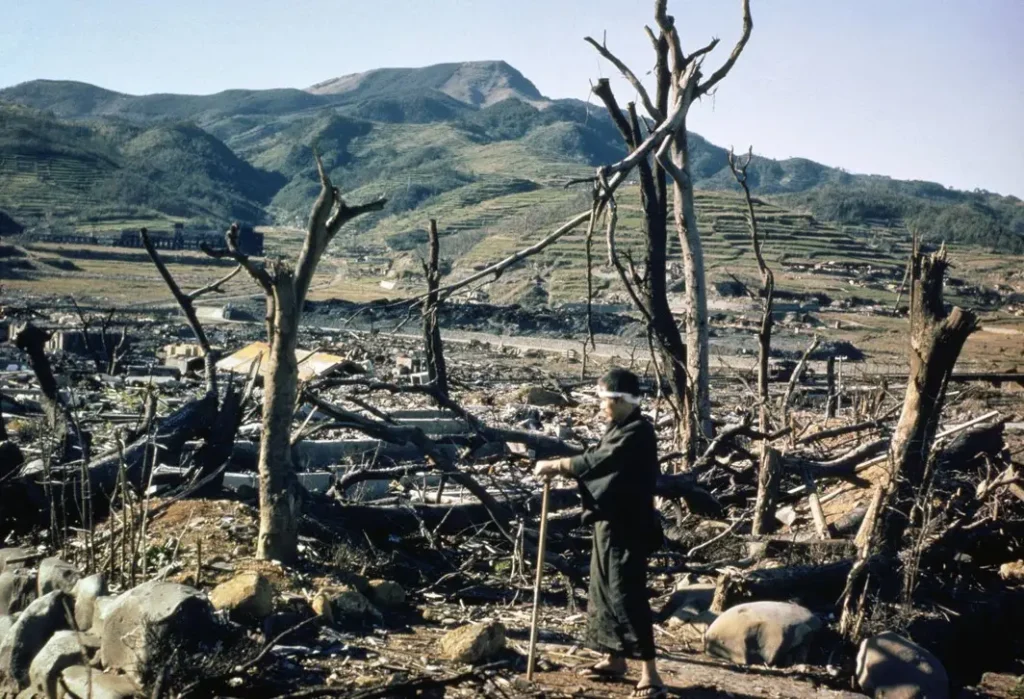
In the immediate aftermath, everything within a one-mile radius of the hypocenters was vaporized or turned to ash. Wood and paper houses burst into flames instantly, while the blast wave flattened concrete structures and hurled debris at supersonic speeds. Firestorms quickly consumed what was left of the cities.
- Hiroshima Casualties: It is estimated that 70,000 to 80,000 people were killed instantly. By the end of 1945, the death toll had risen to roughly 140,000 due to burns, injuries, and radiation sickness.
- Nagasaki Casualties: The surrounding hills somewhat contained the blast, but the immediate death toll still reached between 35,000 and 40,000. By the year’s end, approximately 70,000 to 80,000 had perished.
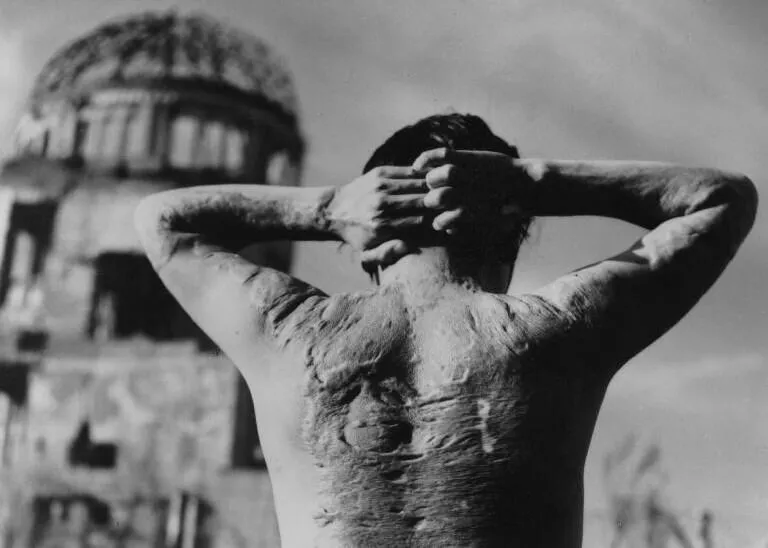
The suffering did not end when the fires died out. Survivors experienced gruesome burns and the terrifying effects of Acute Radiation Syndrome (ARS). Hair fell out in clumps, mysterious purple spots appeared on the skin, and internal bleeding ravaged bodies. Compounding the horror was the “black rain”—sticky, highly radioactive precipitation that fell over the cities, carrying fallout into the water supply and poisoning those who desperately drank it to quench their unnatural thirst.
The suffering, sickness and deaths continued for decades afterwards, leaving a depleted and dejected population.
The Ethical Debate: Justification or Atrocity?
For nearly eight decades, military historians, ethicists, and citizens have fiercely debated the rights and wrongs of using atomic weapons on Hiroshima and Nagasaki. This debate hinges on complex calculations of morality, military necessity, and geopolitical strategy.
Arguments Defending the Bombings: Those who argue the bombings were justified emphasize the fanatical resistance of the Japanese military, as seen in the bloody battles of Iwo Jima and Okinawa. Proponents argue that the bombings were the shock necessary to force Emperor Hirohito to surrender. The primary alternative was Operation Downfall, a massive Allied land invasion of the Japanese home islands. Estimates projected hundreds of thousands of Allied casualties and potentially millions of Japanese military and civilian deaths. From this perspective, the bombs, horrific as they were, ultimately saved lives by bringing a swift end to a brutal global war.
Arguments Condemning the Bombings: Conversely, critics argue that the bombings were fundamentally immoral, constituting war crimes due to the disproportionate slaughter of non-combatants, including women, children, and the elderly. Many historians contend that Japan was already economically crippled, militarily defeated, and seeking diplomatic backchannels to surrender, particularly through the Soviet Union. Some scholars argue that the primary motivation for dropping the bombs was not to defeat Japan, but to intimidate the Soviet Union and establish American dominance in the impending Cold War. From this view, the citizens of Hiroshima and Nagasaki were used as human pawns in a horrific geopolitical demonstration.
For the record: The author of this article is firmly on the side of those who believe that there was no justification for the destruction, death and terrible suffering which were a consequence of these bombings.
If it happened today, the perpetrators would almost certainly be convicted of war crimes and would be looked on as pariahs in the international community.
From Ashes to Peace Cities
In the immediate aftermath of 1945, experts predicted that nothing would grow in Hiroshima or Nagasaki for 75 years. Yet, the resilience of the survivors, and of the earth itself, proved them wrong. The following spring, new buds emerged from the charred stumps of trees, offering a glimmer of hope to the devastated populace.
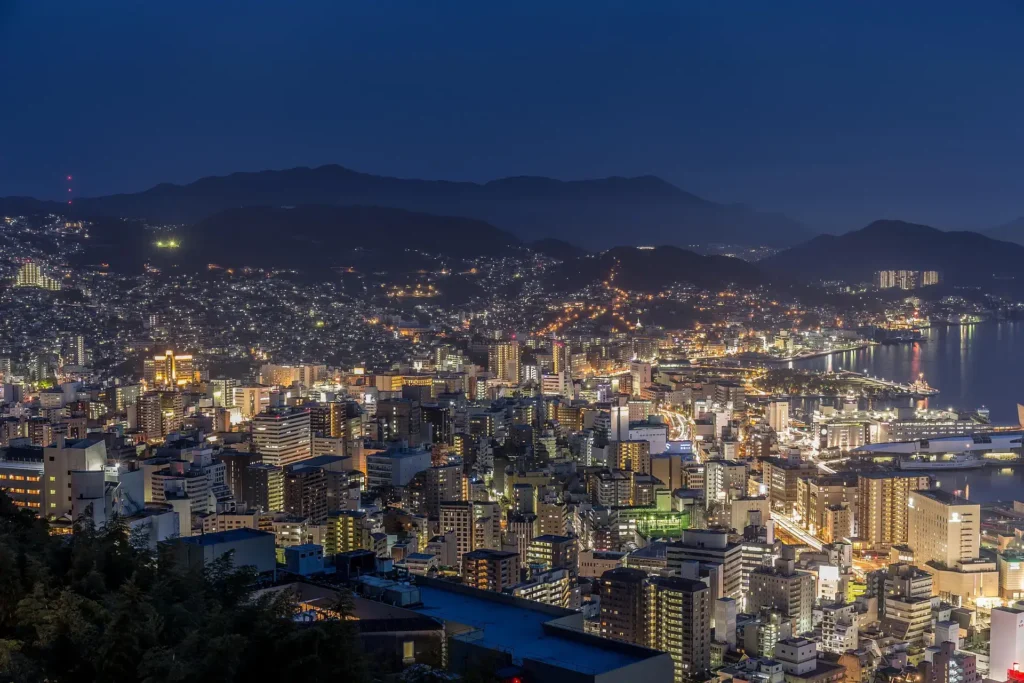
Today, Hiroshima and Nagasaki are vibrant, modern metropolises. They feature bustling economies, towering skylines, and lush green spaces. However, the architecture of both cities deliberately incorporates the scars of their past. They rebuilt not just as economic centers, but as global monuments to peace.
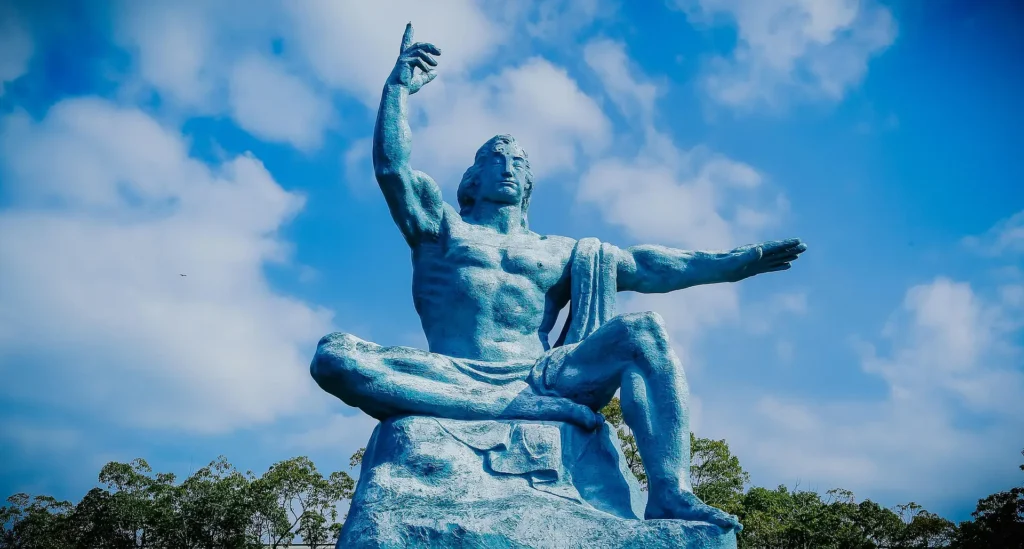
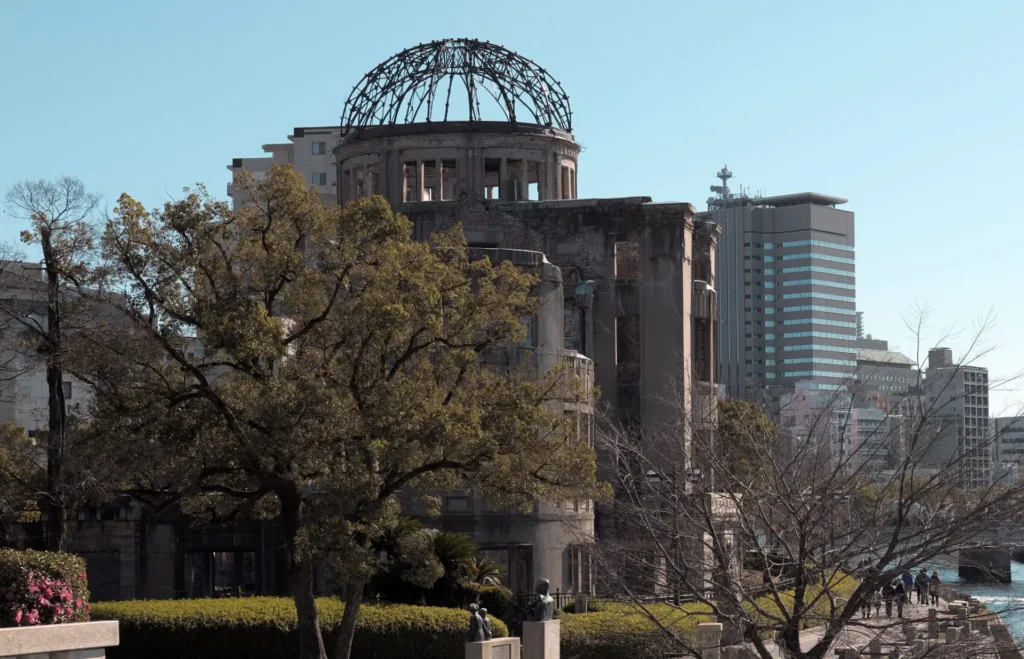
Hiroshima constructed the Peace Memorial Park at the very center of the explosion. Its most haunting feature is the Genbaku Dome (Atomic Bomb Dome), the skeletal ruins of an exhibition hall left exactly as it stood after the blast. Nagasaki similarly built a Peace Park in the Urakami district, dominated by the massive Peace Statue, whose raised right hand points to the threat of nuclear weapons, while its extended left hand symbolizes eternal peace.
Every year, on 9 August, the anniversary of the atomic bombing, a Peace Memorial Ceremony is held in front of the monument where a Peace Declaration to the World is read
Remembrance and the Voices of the Hibakusha
The memory of the bombings is kept alive most fiercely by the Hibakusha—the surviving victims of the atomic bombs. For decades, the Hibakusha faced immense social stigma and health struggles, yet they transformed their trauma into a lifelong campaign for nuclear disarmament.
The people of Hiroshima and Nagasaki view remembrance not as a vehicle for revenge, but as a solemn duty to humanity. Every year on August 6 and August 9, tens of thousands of people gather in the respective peace parks. At the exact moments of detonation, bells toll, sirens wail, and the cities observe a minute of profound silence. Lanterns are floated down the Motoyasu River in Hiroshima to guide the spirits of the dead.
Hiroshima and Nagasaki stand today as twin pillars of a critical global plea. Their tragedy is etched into history, but their modern existence serves as a testament to the resilience of the Japnese people and an enduring, desperate hope: never again.
We can only echo that sentiment: Never again!