
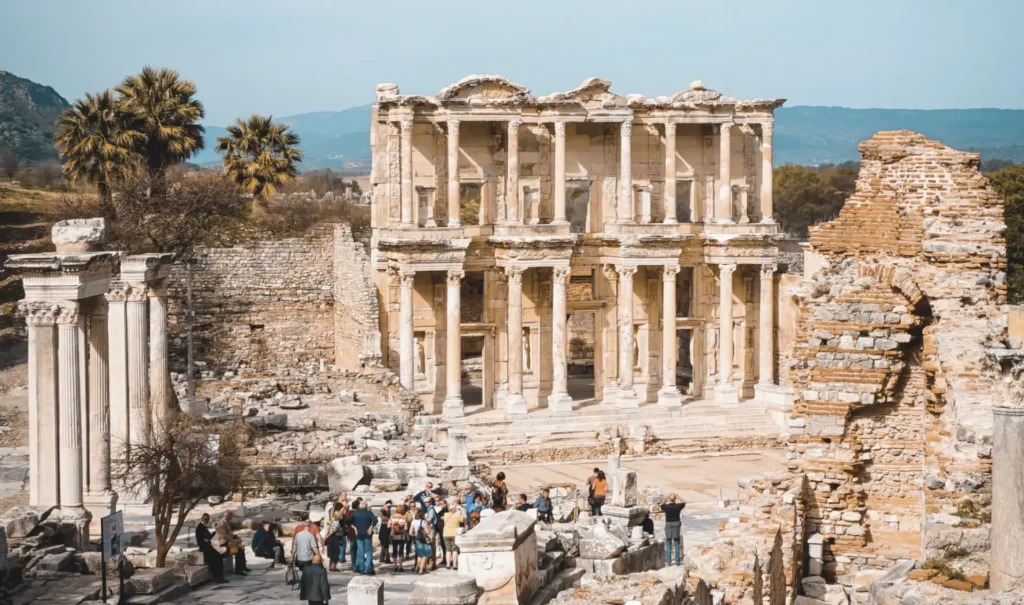
Ephesus
Ephesus is a breathtaking ancient city located in the Aegean region of modern-day Turkey. Once a thriving Greek and Roman metropolis, it now stands as one of the best-preserved archaeological sites in the Mediterranean world. For history enthusiasts, architecture lovers, and curious travelers alike, walking the marble streets of this ancient powerhouse offers an unparalleled glimpse into the classical era.
Where is Ephesus Located?
Ephesus is situated near the western coast of Turkey, within the borders of the Izmir Province. The archaeological site itself sits just 22 kilometres away from the Turkish town of Kusadasi. Its proximity to the Aegean Sea was historically responsible for its massive wealth, though centuries of river silting have now pushed the coastline several miles away from the ruins.
When planning a visit, travellers typically base themselves in one of three nearby hubs, depending on their travel style:
Town/City | Distance to Ephesus | Best For |
|---|---|---|
| Selçuk | 3 km | Budget travellers, historians, and those wanting to be closest to the ruins. |
| Kuşadası | 22 km | Cruise ship passengers, resort lovers, and beachgoers. |
| Izmir | 80 km | City explorers flying into the region via Adnan Menderes Airport. |
A Brief History of Ephesus
Simply put, Ephesus was a highly successful ancient trading hub that continuously changed hands between several great empires. In a more detailed context, the city was originally established as an Attic-Ionian Greek colony in the 10th century BCE. Over the centuries, it was conquered by the Persians, liberated by Alexander the Great, and eventually absorbed by the Roman Republic.
Ephesus truly flourished under the Roman Empire, becoming the capital of the province of Asia. During its peak in the 1st and 2nd centuries CE, Ephesus had a population of over 250,000 people, making it one of the largest and most influential cities in the Mediterranean. The city eventually fell into decline due to the silting up of its crucial harbor, combined with a series of devastating earthquakes, leading to its complete abandonment by the 15th century.
Architectural Marvels
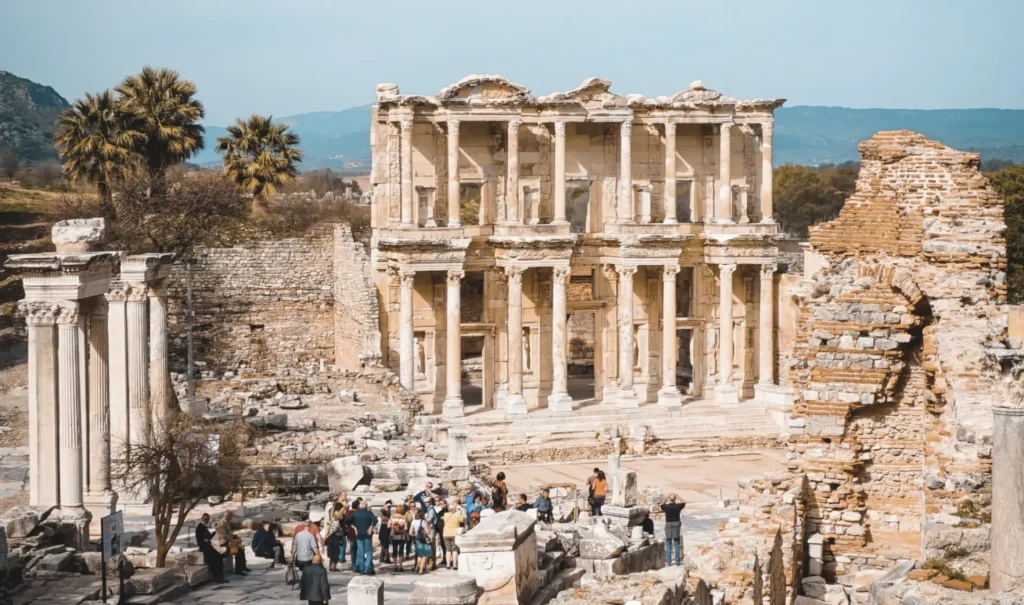
The ruins of Ephesus showcase a magnificent, evolving blend of Hellenistic and Roman architectural styles. Hellenistic architecture is prominently characterized by its proportional harmony, massive stone columns, and grand, open civic spaces. As the Romans assumed control, they seamlessly integrated their own monumental engineering feats into the city’s fabric.
Visitors will notice vast Roman bath complexes, intricate aqueduct systems, and the widespread, innovative use of arches and vaulted ceilings. The city’s layout follows a sophisticated urban grid plan adapted to the natural topography of the surrounding hills. This harmonious combination of two distinct eras makes the site a living, outdoor museum of classical engineering and advanced urban planning.
Accommodation near Ephesus
The Temple of Artemis
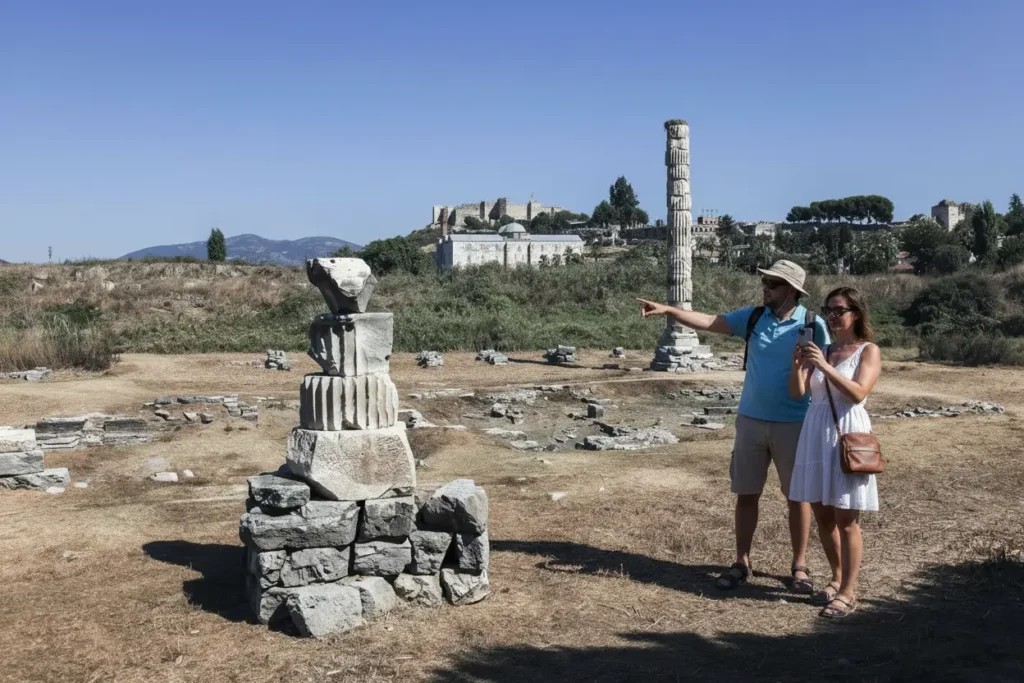
No guide to Ephesus is complete without mentioning the legendary Temple of Artemis. Known also as the Artemision, it was universally celebrated as one of the Seven Wonders of the Ancient World. Dedicated to the Greek goddess of the hunt, wild nature, and fertility, this colossal marble temple was rebuilt three separate times before its final destruction in 401 CE by a mob led by St. John Chrysostom.
Today, the site requires a bit of imagination. Only a single, reassembled column stands in a marshy field near Selçuk to mark the exact location of this once-magnificent structure. Despite its currently ruined state, standing on the very grounds where ancient pilgrims travelled thousands of miles to worship remains a deeply fascinating and evocative experience.
Tours and Tickets
Must-See Historical Sites in Ephesus
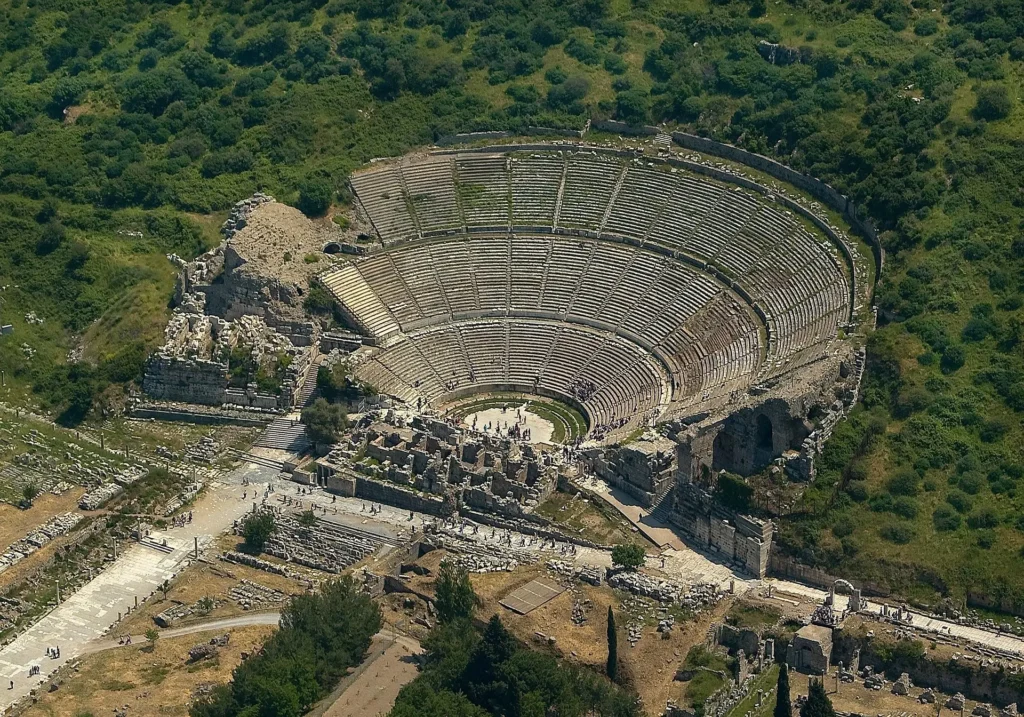
Beyond the Temple of Artemis, the main archaeological zone of Ephesus is packed with monumental structures.
- The Library of Celsus: Built in 117 CE, this two-story monumental tomb and library originally held over 12,000 precious scrolls. Its intricately carved, restored facade is the most iconic and photographed image of Ephesus.
- The Great Theatre: Capable of seating 25,000 spectators, this massive open-air theatre was carved directly into the side of Mount Pion. It was used for theatrical performances, political discussions, and violent gladiator combat.
- The Terrace Houses: Often referred to as the “houses of the rich,” these currently active archaeological digs reveal the luxurious daily lifestyles of Ephesus’s elite citizens. They feature incredibly well-preserved floor mosaics, stunning wall frescoes, and early examples of indoor plumbing and under-floor heating systems.
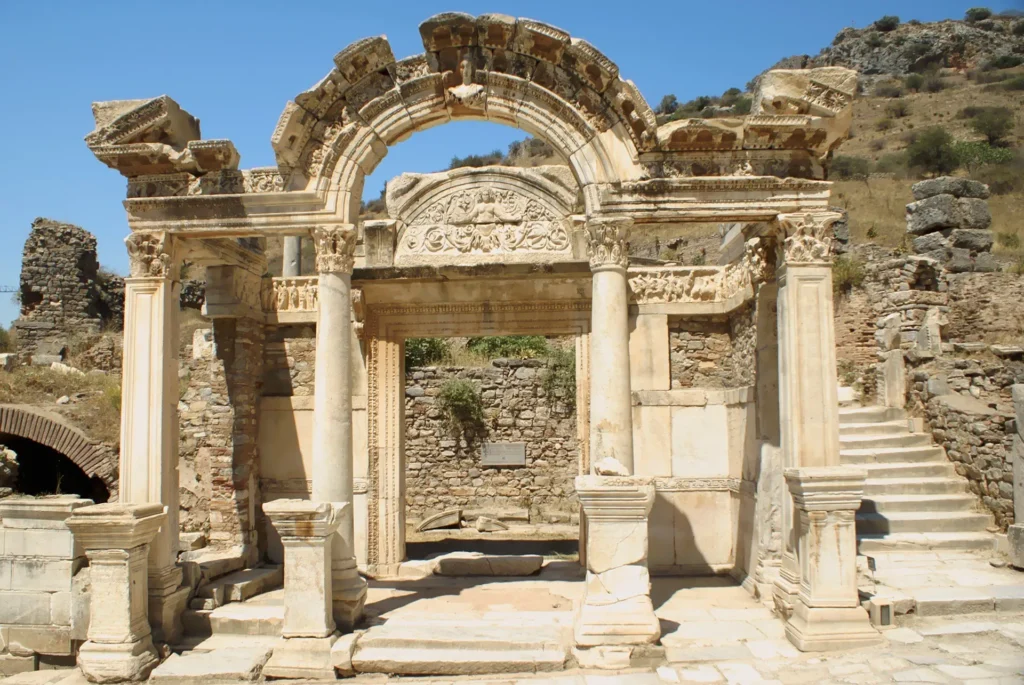
- The Temple of Hadrian: A beautiful, smaller Corinthian-style temple featuring a famous, intricate relief of Medusa designed specifically to ward off evil spirits.
Essential Visitor Information
Planning your trip requires a few practical considerations to ensure a comfortable experience. The best time to visit is during the spring (April to May) or autumn (September to October) when the weather is milder, and the huge summer crowds have dispersed. If you must visit during the summer, plan to arrive exactly when the gates open at 8:00 AM to avoid intense midday heat and massive cruise ship tour groups.
- Admission Costs: Standard entry tickets typically cost around 40 USD, though prices can fluctuate frequently due to the region’s economic policies and exchange rates.
- Terrace Houses: An additional ticket (usually around 15 USD) is required to enter the Terrace Houses, but skipping them is highly discouraged as they are a major highlight.
- Footwear: Wear sturdy, rubber-soled walking shoes. The ancient marble streets, particularly the famous Curetes Street, have been polished by millions of footsteps and are notoriously slippery.
- Sun Protection: Bring plenty of water, a wide-brimmed hat, and strong sun protection, as shade within the vast archaeological site is scarce.
Ephesus Accommodation on The Map
Summary of Key Points
- Location: Ephesus is located near the western coast of Turkey, right next to the modern town of Selçuk and a short drive from Kuşadası and Izmir.
- History: Originally an Ionian Greek colony, it peaked as a massive Roman provincial capital before declining due to earthquakes and harbour silting.
- Architecture: The city features a stunning mix of classical Hellenistic proportions and advanced Roman engineering, including arches, aqueducts, and baths.
- Highlights: Key attractions include the Library of Celsus, the Great Theatre, the incredibly detailed Terrace Houses, and the remains of the Temple of Artemis.
- Travel Tips: Visit during spring or autumn, arrive early to beat the heat, wear non-slip shoes for the marble streets, and expect to pay around 40 USD for main entry plus 15 USD for the Terrace Houses.