
Navigating the Tube: The Ultimate Guide to the London Underground
The London Underground is more than just a transit system; it is the beating heart of London. Known globally as “The Tube,” it is a marvel of engineering, a historical treasure, and the lifeline that connects the sprawling corners of the British capital. For Londoners, it is a daily routine; for visitors, it is an essential adventure.
This guide covers everything you need to know about the world’s oldest underground railway. From its Victorian roots to the futuristic Elizabeth Line (technically not the Tube, but a close cousin!), here is your deep dive into the London Underground.
London Underground: A Brief History
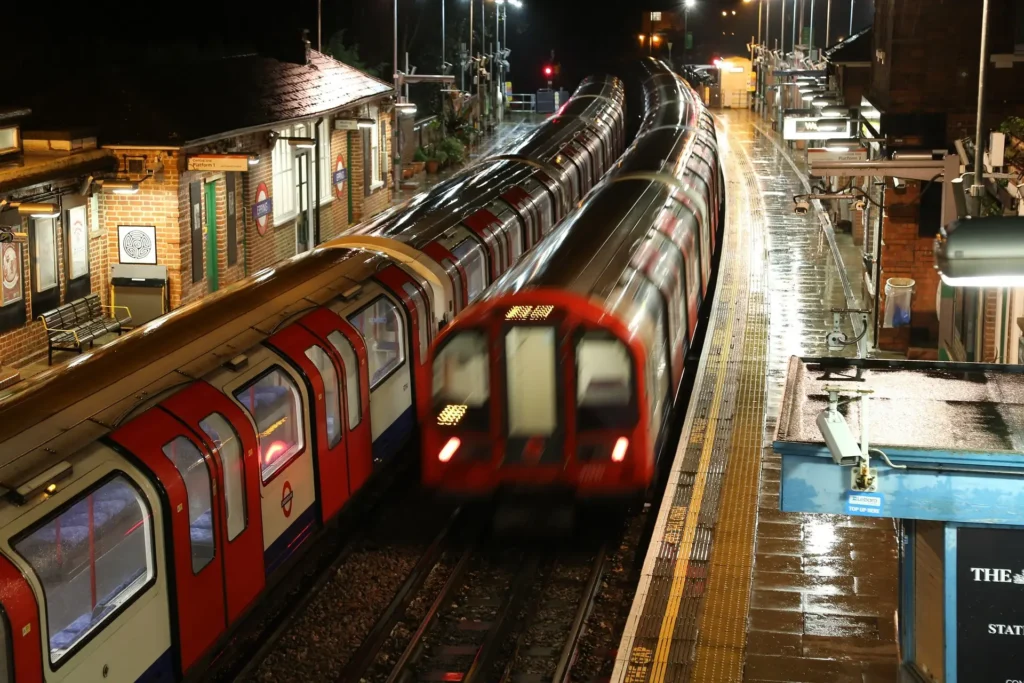
The story of the London Underground begins in the Victorian era, a time of immense industrial growth and suffocating street congestion. To solve the gridlock above, engineers looked below.
On January 9, 1863, the Metropolitan Railway opened between Paddington and Farringdon, becoming the world’s first underground passenger railway. It was a steam-powered marvel, carrying 38,000 passengers on its opening day alone. The smoke-filled tunnels were far from the clean electric lines we know today, yet it was an instant success.
The system expanded rapidly. In 1890, the City and South London Railway introduced the first deep-level electric railway, giving rise to the nickname “The Tube” due to the circular shape of the tunnels. Over the next century, the network grew to survive two World Wars, serving as bomb shelters during the Blitz, and evolved into the massive, electrified network we see today.
By The Numbers: The Scale of the London Underground System
To truly understand the magnitude of the London Underground, you have to look at the statistics. It is a maze of tunnels that keeps London moving.
- Daily Passengers: The network handles up to 5 million passenger journeys a day. In the 2023/24 financial year alone, the Underground saw approximately 1.18 billion journeys, recovering strongly to about 88% of its pre-pandemic levels.
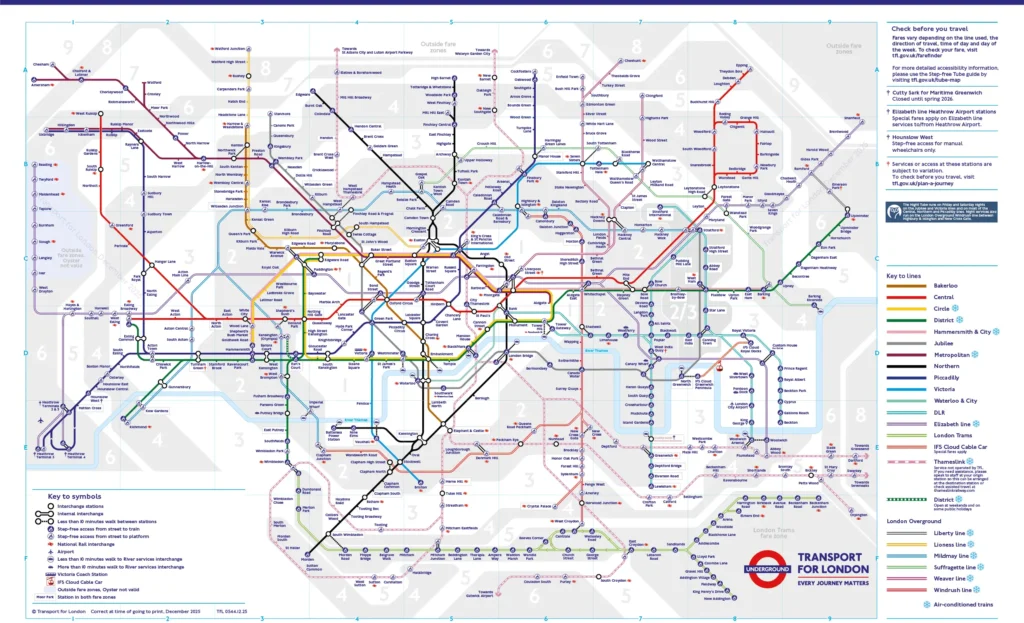
- The Network: There are 11 official lines, each identified by its own colour on the iconic Tube map designed by Harry Beck in 1931.
- Stations: There are 272 stations serving the network. Interestingly, despite the name “Underground,” about 55% of the system runs above ground, particularly in the suburbs.
- Length: The total network length is roughly 402 kilometers (250 miles).
- Longest Distance: The longest journey you can take without changing trains is on the Central Line between West Ruislip and Epping, covering a staggering 34 miles.
Practical Information for Travelers
Navigating such a massive system can be daunting. Here are the essentials you need to master the commute.
Operating Hours and Peak Times
The Tube generally runs from 5:00 AM until just after midnight from Monday to Saturday, with reduced operating hours on Sundays. However, the Night Tube offers 24-hour service on Fridays and Saturdays on five specific lines (Victoria, Jubilee, and parts of the Central, Northern, and Piccadilly lines), which is perfect for late-night theatregoers or party lovers. Avoid Peak Times if Possible: London is a working city, and “Rush Hour” is a serious affair. If you want a comfortable journey, try to avoid travelling during these windows:
- Morning Peak: 07:30 – 09:30
- Evening Peak: 17:00 – 19:00
During these times, major stations like Oxford Circus, Waterloo, and King’s Cross St. Pancras can become incredibly crowded.
Paying for Your Journey
Gone are the days of queuing for paper tickets. London Underground has one of the most advanced contactless payment systems in the world.
- Contactless & Mobile Pay: You can simply tap your contactless bank card, Apple Pay, or Google Pay on the yellow card readers. This is the easiest method for visitors.
- Oyster Card: The classic smartcard of London. You can buy one at stations on the London Underground, top it up with credit, and tap to go.
- Daily Cap: Whether you use Contactless or Oyster, the system automatically “caps” your spending. Once you hit a certain amount (depending on the zones you travel through), the rest of your travel that day is free. You will never pay more than the cost of a Day Travelcard.
7 Essential Tips for Visitors Using the London Underground
- Stand on the Right: This is the golden rule of London etiquette. When using escalators, always stand on the right so people can walk past you on the left. Blocking the left side is the quickest way to annoy a local.
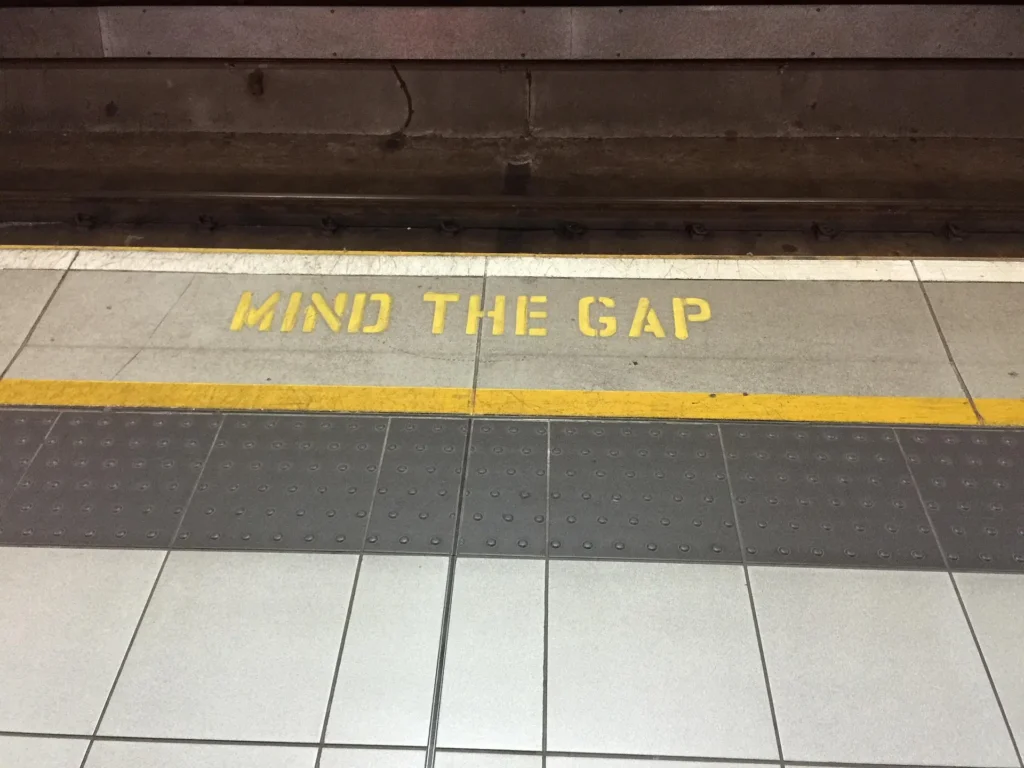
- Mind the Gap: You will hear this famous phrase announced at stations where the platform curves away from the train. Watch your step when boarding and alighting.
- Let People Off First: Never try to board the train until all passengers have stepped off. Stand to the side of the doors, not directly in front of them.
- Move Down Inside the Car: Don’t stop at the doorway once you are on the train. Move into the center of the carriage to make room for others behind you.
- Check the Destination: Some lines, like the Northern and District lines, split into different branches. Always check the digital display on the front of the train and the platform screens to ensure you are boarding a train going to your specific destination.
- Carry Water in Summer: While the Tube is efficient, the deep-level lines (like the Central and Bakerloo) are not air-conditioned and can get very hot during the summer months.
- Download Citymapper: While the official TfL app is good, the Citymapper app is widely considered the best tool for navigating London’s transit, offering real-time data and the best route options.
10 Most Interesting Stations on The London Underground
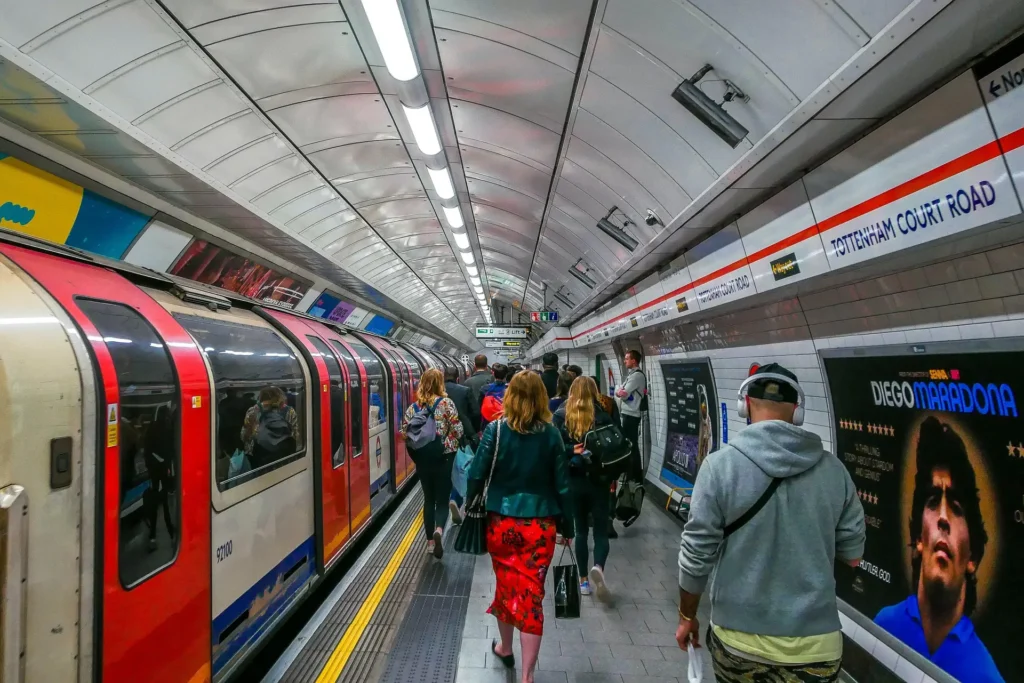
The Tube isn’t just transport; it’s an art gallery and a history museum. Here are 10 stations worth a detour.
- Baker Street (Circle/Hammersmith & City Lines): Opened in 1863, this is one of the original stations. The platforms have been restored to look as they did in the Victorian era, complete with old diagrams and lighting. Look for the Sherlock Holmes silhouettes on the tiles.
- Westminster (Jubilee Line): A stark contrast to Baker Street, Westminster is a cathedral of concrete. Its brutalist architecture, featuring massive crisscrossing beams and escalators, looks like a sci-fi movie set.
- Gants Hill (Central Line): Located in East London, the lower concourse of this station features a barrel-vaulted ceiling that was inspired by the majestic stations of the Moscow Metro.
- Southgate (Piccadilly Line): A stunning example of Art Deco architecture. The station building is circular and looks like a flying saucer has landed. It retains its original 1930s escalators lighting and bronze features.
- Canary Wharf (Jubilee Line): Designed by Sir Norman Foster, this station is enormous. It was built to handle 50,000 people at once and has a distinct “cathedral” feel, famously used as a filming location for Rogue One: A Star Wars Story.
- Leytonstone (Central Line): This station celebrates the master of suspense, Alfred Hitchcock, who was born nearby. The entrance corridors are lined with incredible mosaics depicting scenes from his most famous films, such as The Birds and Psycho.
- Gloucester Road (District/Piccadilly Lines): While the station is functional, it has a disused platform that has been turned into a dedicated space for “Art on the Underground,” hosting rotating large-scale art installations.
- Piccadilly Circus (Bakerloo/Piccadilly Lines): A masterpiece of subterranean engineering. The circular concourse below the street is a Grade II listed structure, and the station itself is one of the few entirely underground stations with no surface building.
- Cockfosters (Piccadilly Line): The terminus of the London underground Piccadilly line, this station is a beautiful example of modernist design by architect Charles Holden. It features concrete and glass structures that flood the platform with natural light.
- Embankment (Northern Line): While the station itself is standard, the northbound Northern Line platform is famous for a sentimental reason. It is the only place on the network where you can still hear the original “Mind the Gap” recording by actor Oswald Laurence. His widow requested that it be reinstated so she could hear his voice.
Final Thoughts
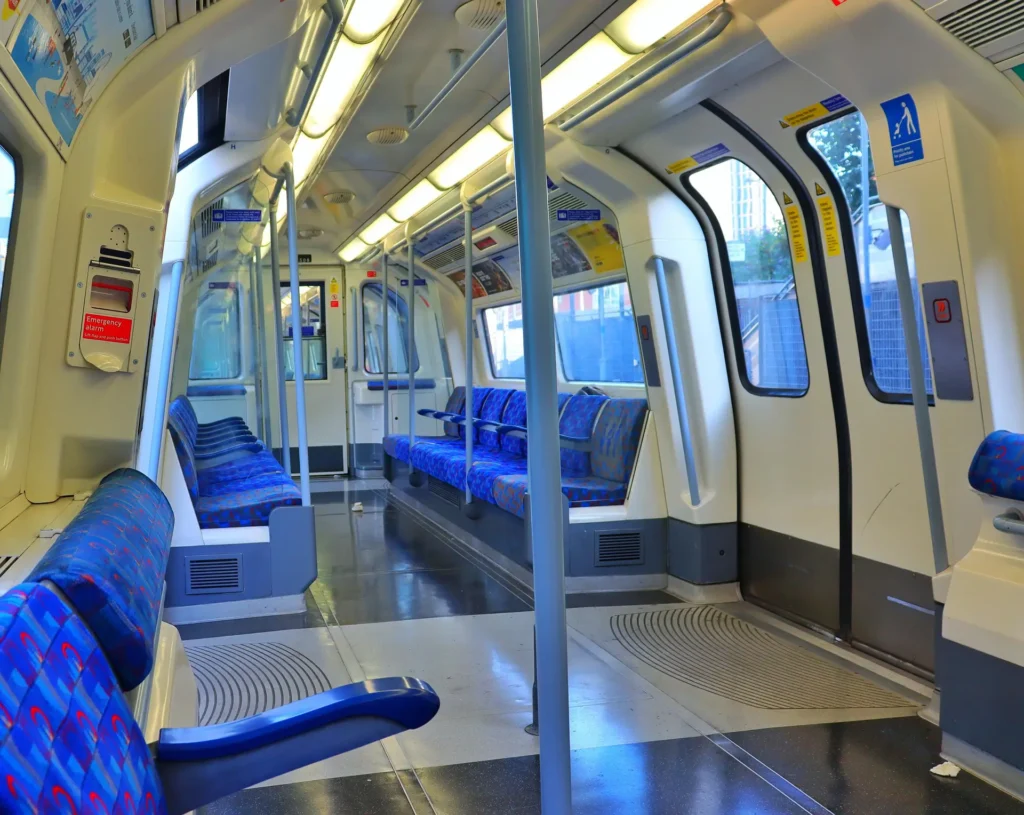
The London Underground is an attraction in its own right. It is noisy, busy, and sometimes hot, but it is also efficient, historic, and full of character. By avoiding the rush hour and following the simple etiquette of the escalator, you will find that the Tube is the absolute best way to unlock the secrets of London. Hop on, hop off, avoid the rush hour and gridlock and reach your destination quickly and in comfort.
So grab your Oyster card, mind the gap, and enjoy your trip!