
Bucharest Offers Numerous Business Opportunities
Bucharest, Romania, is a city with a long and interesting history. It has seen occupation, invasion, renewal and decline. Despite its size relative to other Romanian cities and its long history, it only became the capital of the country towards the end of the nineteenth century. Here, we discuss opportunities for investment in Bucharest.
History
Wallachia and Moldavia were united in 1861. Bucharest became the capital city of a kingdom and entered a period of splendour. Fine buildings were erected, some of them in the style of Paris. High culture prevailed, and the city became known as ‘the Paris of the East’, so admired was it for its culture and refinement.
The development of the city was restrained by endemic floods for many years. It stands on the Dambovita River, which is a tributary of the Danube, and is prone to flooding. When the river was channelled in 1883, the flooding was stopped, and the city became more stable. This improved development prospects.
The twentieth century was bad for Europe. Politicians played war and power games at the terrible expense of the people. Political ideologies were used by ruthless power mongers to grab riches for themselves at the expense of individuals who were often persecuted for any opposition. During the First World War Bucharest was occupied by the Germans. There was a respite between the wars, but the Second World War was a disaster for Romania. It was first on the side of the Axis powers, then the Allies, and was bombed by both.
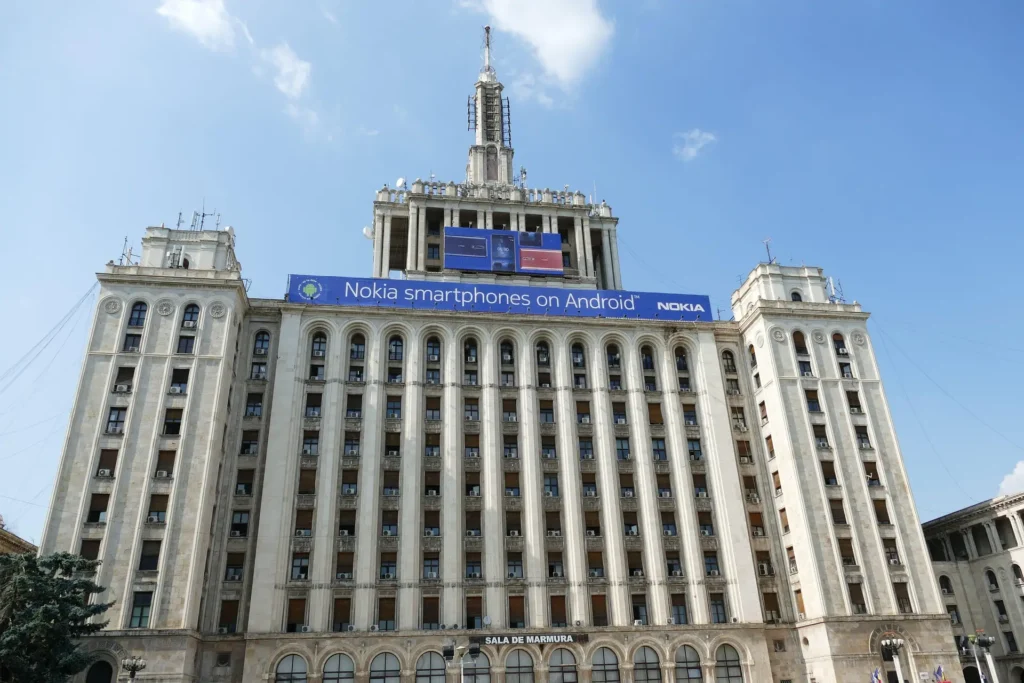
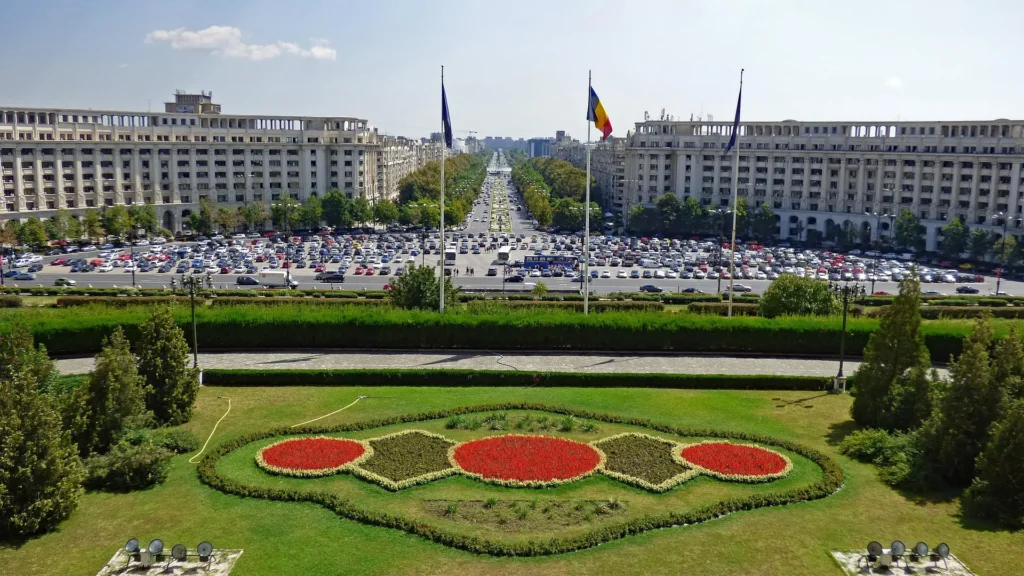
The Second World War ended with many east Europe countries falling foul of political ideologues who feathered their nests at the expense of their countrymen. Nicolae Ceaușescu was Romania’s candidate for puppet dictator, and he managed to do a great deal of damage before being hounded out in 1989. By that time he had destroyed many historic and beautiful buildings, replacing them with communist style tower, blocks and iron monuments to communism.
Various political advances have taken place since the demise of communism and dictatorship. In general, there has been an improvement in circumstances. New suburbs have begun to develop on what were the outskirts of the city, and efforts are being made to restore the city centre.
Bucharest covers more than two hundred square kilometres of what was once forest. Like Rome, it has seven hills, but is low-lying for the most part. Urban expansion is still taking place as new suburbs grow around the historic city centre. The population is more than two million people.
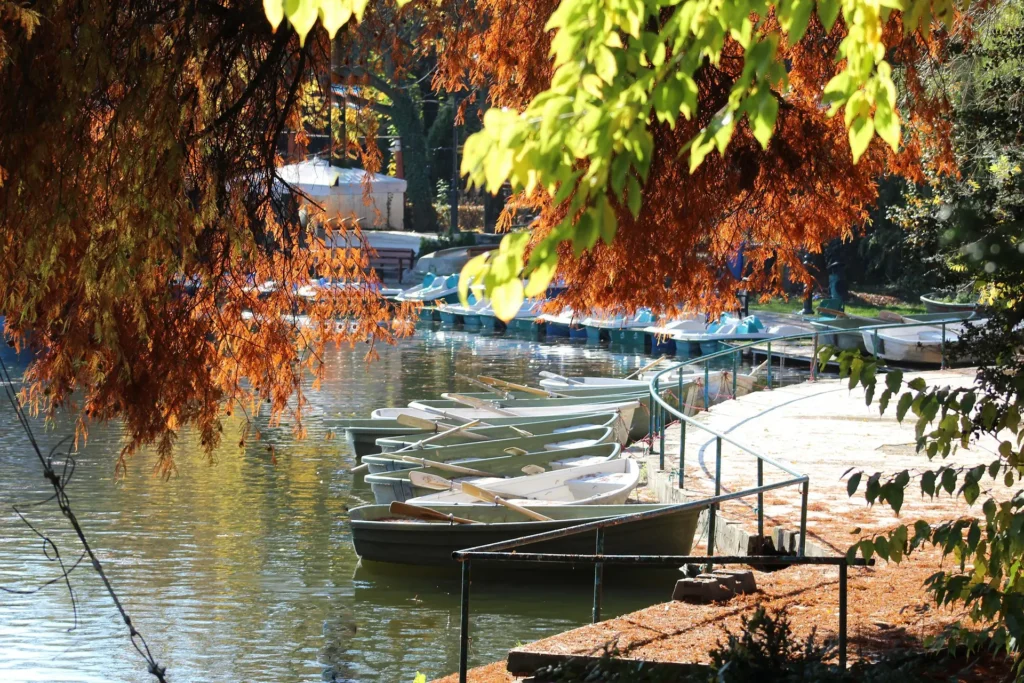
There are many lakes in Bucharest. One artificial lake is named Cismigiu. It has famous gardens planted around it and has endured for many years. With the new political dispensation after the years of dictatorship, civic authorities are restoring the historic gardens and other architectural features buildings that graced the city in the past.
Joining EU opened Opportunities for Investment in Bucharest
In 2006, Romania became a member of the European Economic Community. Although the Eurozone faces many threats in 2011, membership of the Union has had benefits for Bucharest, Romania. Retail outlets have expanded as capital from international corporations has flooded into the city, and real estate has appreciated. Economic opportunities accompany an improved quality of life. The fact that the improvements have started from a low base means that there is room for growth, so good economic opportunities exist for investment in Bucharest.
IT Companies in Bucharest
Bucharest has rapidly emerged as a premier technology hub in Eastern Europe, attracting top engineering talent and significant capital. The city’s IT ecosystem is vibrant, hosting a mix of homegrown unicorns, robust startups, and major multinational hubs.
Prominent IT companies with deep roots or massive operations in Bucharest include UiPath, Bitdefender, and Endava. UiPath, a global leader in robotic process automation, originated in Bucharest and now operates globally. Bitdefender is a privately held cybersecurity titan globally recognized for its antivirus software. Additionally, IT services giants like Endava maintain massive engineering centers in the city to leverage local technical expertise.
Investment in Bucharest tech scene requires a dual approach depending on the company’s maturity:
- Public Markets: You can invest in globally listed companies like UiPath and Endava directly through standard brokerage accounts on the New York Stock Exchange. For locally listed tech firms, investors can buy shares through the Bucharest Stock Exchange (BVB).
- Private Markets: Many innovative startups and mid-sized firms, such as Bitdefender, remain private. Investment in Bucharest in these entities is largely restricted to Venture Capital funds and Angel Investors who are ready to deploy millions in USD through private equity rounds.
Buying Property in Bucharest
Buying real estate in Bucharest presents strong investment opportunities, but the regulations depend entirely on your nationality. EU and EEA citizens share equal rights with locals, allowing them to freely purchase apartments, houses, and land without restrictions. Non-EU citizens face specific limitations; while they can legally buy apartments and commercial buildings, acquiring the actual land requires an international reciprocity treaty between Romania and their home country.
Buyers must account for several transaction taxes and fees. Expect to pay notary fees (approximately 1% to 2% of the purchase price) and a land registry fee (around 0.15%). If you buy a brand-new property directly from a developer, a Value Added Tax (VAT) applies, typically ranging from 9% to 19% depending on the property’s value and size. Once purchased, owners are subject to a nominal annual municipal property tax, which remains quite low for residential units compared to Western European capitals.