

Information About Bilbao
Travel Guide to the Basque Country’s Crown Jewel
Located in the lush, green mountains of Northern Spain, Bilbao is a city that has masterfully reinvented itself without losing its historic soul. Once known primarily as a gritty industrial port, this busy city in the Basque Country is now celebrated globally as a hub of art, cutting-edge architecture, and extraordinary gastronomy. So, it is a great destination for art aficionados, foodies searching for the perfect pintxo, or travellers eager to explore unique cultures. A visit to Bilbao offers an unforgettable experience. This comprehensive guide covers everything you need to know to plan the perfect trip to Bilbao, Spain.
A Very Short History
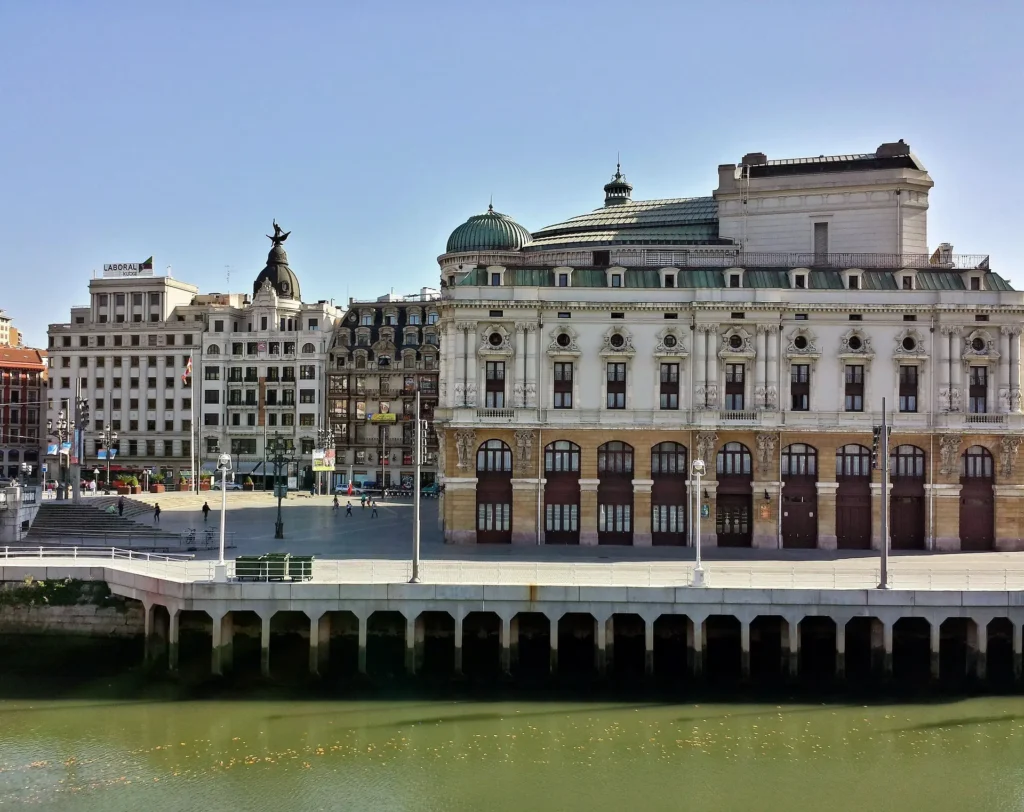
Bilbao was officially founded in the early 14th century and quickly grew into a commercial hub thanks to its strategic location on the Nervión River. For centuries, the city thrived on iron mining, steel production, and shipbuilding, becoming the industrial powerhouse of Northern Spain during the 19th and 20th centuries. However, the economic crisis of the 1980s forced the city into a steep decline, leaving its riverbanks littered with abandoned shipyards. In a bold move, city planners launched a massive revitalisation project in the 1990s, anchored by the construction of the world-famous Guggenheim Museum. This incredible transformation, now famously dubbed the “Bilbao Effect,” successfully shifted the city from a decaying industrial centre to a gleaming capital of culture and tourism.
By the Numbers: Population and Geography
Bilbao is the largest city in the Basque Country and the capital of the Biscay province. The city proper boasts a population of approximately 345,000. However, when factoring in the surrounding metropolitan area, known as Greater Bilbao, the population swells to nearly 1 million people. This makes it one of the most populous urban areas in Northern Spain, offering the amenities of a major European city while maintaining the walkability and charm of a much smaller town.
Visiting Bilbao: What to Expect
Visiting Bilbao is an exercise in delightful contrasts. You will find a city where ancient Gothic churches cast shadows on sleek, futuristic structures. The local atmosphere is deeply welcoming, though fiercely proud of its distinct Basque heritage. English is widely spoken in tourist areas and hotels, but you will frequently hear locals speaking both Spanish and Euskera, the ancient and linguistically isolated Basque language. The city is incredibly safe, clean, and pedestrian-friendly, making it an ideal destination for solo travelers, couples, and families alike.
Flights and Accommodation
Find Flights
Find Accommodation
Weather in Bilbao
Unlike the sun-drenched beaches of Southern Spain, Bilbao experiences an oceanic climate, which means the weather is heavily influenced by the nearby Bay of Biscay. This results in milder temperatures year-round, but also a significantly higher chance of rainfall. Locals even have a specific word for the light, persistent drizzle that frequently blankets the city: sirimiri.
| Season | Average High | Average Low | What to Expect |
|---|---|---|---|
| Spring (Mar – May) | 17°C (63°F) | 9°C (48°F) | Unpredictable weather with a mix of sunshine and rain; blooming parks. |
| Summer (Jun – Aug) | 26°C (79°F) | 16°C (61°F) | Warm, pleasant, and humid. The best time for outdoor festivals and coastal day trips. |
| Autumn (Sep – Nov) | 20°C (68°F) | 12°C (54°F) | Mild temperatures but increasingly rainy; beautiful fall foliage in the surrounding hills. |
| Winter (Dec – Feb) | 13°C (55°F) | 6°C (43°F) | Cool and damp, but rarely freezing. Snow in the city is very uncommon. |
Airports and Transport Options
Getting to and around Bilbao is incredibly efficient thanks to a world-class public transportation network.
Airports: Travellers typically arrive via Bilbao Airport (BIO), located just 9 kilometres north of the city centre. Designed by renowned architect Santiago Calatrava, the airport is shaped like a soaring bird and is locally referred to as La Paloma (The Dove). It serves numerous major European hubs, making international connections easy.
To reach the city centre from the airport, the Bizkaibus line A3247 departs every 15 to 20 minutes, costing around 3 EUR (approximately 3.25 USD) for a one-way trip. Taxis are also readily available and typically cost between 25 EUR and 30 EUR to the city centre.
City Transport: Once in the city, the Metro Bilbao is your best friend. Designed by Norman Foster, its iconic glass entrances—affectionately called Fosteritos—are a staple of the city’s streets. The metro is clean, fast, and easy to navigate.
Bilbao also features an excellent eco-friendly tram system (Euskotren Tranbia) that glides past many major tourist attractions along the river, as well as a comprehensive red bus network (Bilbobus).
Cards for Bilbao transport systems are available here. They are very good value
However, the city is surprisingly compact, and you will likely find yourself walking to most destinations.
Top 10 Visitor Attractions
No Bilbao travel guide is complete without a curated list of must-see sights. Here are the top 10 visitor attractions:
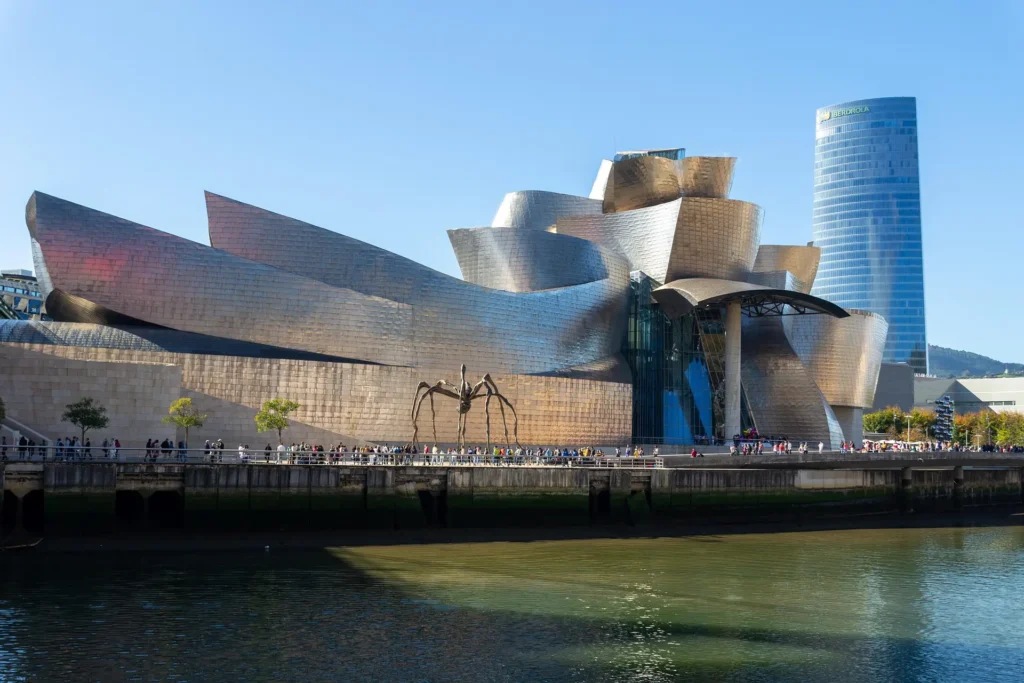
- Guggenheim Museum Bilbao: A shimmering masterpiece of contemporary architecture designed by Frank Gehry, housing an impressive collection of modern and contemporary art.
- Casco Viejo (The Old Quarter): The historical heart of the city, famous for its original “Seven Streets” (Zazpi Kaleak), vibrant atmosphere, and historic plazas.
- Mercado de la Ribera: Holding the Guinness World Record for the largest covered food market in Europe, it is a bustling hub of fresh local produce and gourmet food stalls.
- Bilbao Fine Arts Museum (Museo de Bellas Artes): A highly esteemed gallery featuring a comprehensive collection of Basque, Spanish, and European art spanning from the Middle Ages to the present day.
- Mount Artxanda: Accessible via a vintage funicular railway, this mountain offers breathtaking panoramic views of the entire city and the surrounding valley.
- Azkuna Zentroa: Formerly a wine and oil warehouse, this building was redesigned by Philippe Starck into a futuristic cultural and leisure centre, complete with a glass-bottomed rooftop pool.
- Basilica of Begoña: A beautiful 16th-century Gothic sanctuary dedicated to the patron saint of Biscay, overlooking the city from a hilltop.
- Zubizuri Bridge: An elegant, sweeping pedestrian bridge designed by Santiago Calatrava that connects the two banks of the Nervión River.
- San Mamés Stadium: The state-of-the-art home of Athletic Club Bilbao, a football team famous for its unique philosophy of only fielding players of Basque descent.
- Doña Casilda Iturrizar Park: The city’s primary green space, featuring manicured gardens, a duck pond, and classical fountains, perfect for a relaxing afternoon stroll.
Tours and Tickets
Architecture: A Masterful Blend of Old and New
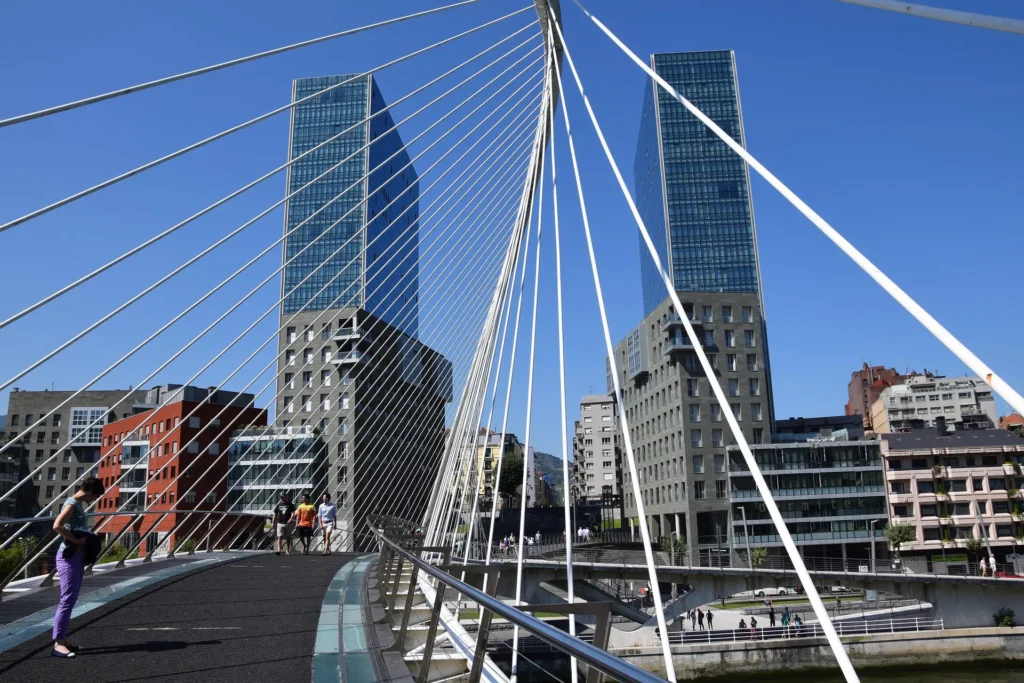
Bilbao is a paradise for architecture enthusiasts. The city’s aesthetic is defined by the stark, beautiful contrast between its historic roots and its futuristic ambitions. In the Casco Viejo, you will wander past 14th-century Gothic cathedrals, traditional Basque timber-framed facades, and ornate 19th-century theatres. Just a short walk down the river, the landscape morphs into a showcase of “Starchitecture.” Frank Gehry’s titanium-clad Guggenheim is the crown jewel, but it is accompanied by Santiago Calatrava’s swooping bridges and Norman Foster’s sleek transit stations. This deliberate architectural strategy has turned the city itself into an open-air museum of modern design.
Culture: Deep Basque Roots
The culture of Bilbao is intrinsically tied to its Basque identity. The Basque people are one of the oldest ethnic groups in Europe, possessing traditions, sports, and a language that predate Roman influence. While exploring, you might witness traditional Basque rural sports like stone lifting (harri-jasotzea) or wood chopping, especially during festivals. The most important cultural event is Aste Nagusia (The Great Week), a massive nine-day street festival held every August. It features daily concerts, fireworks, traditional dancing, and the appearance of Marijaia, the beloved mascot of the festival.
Food, Wining, and Dining
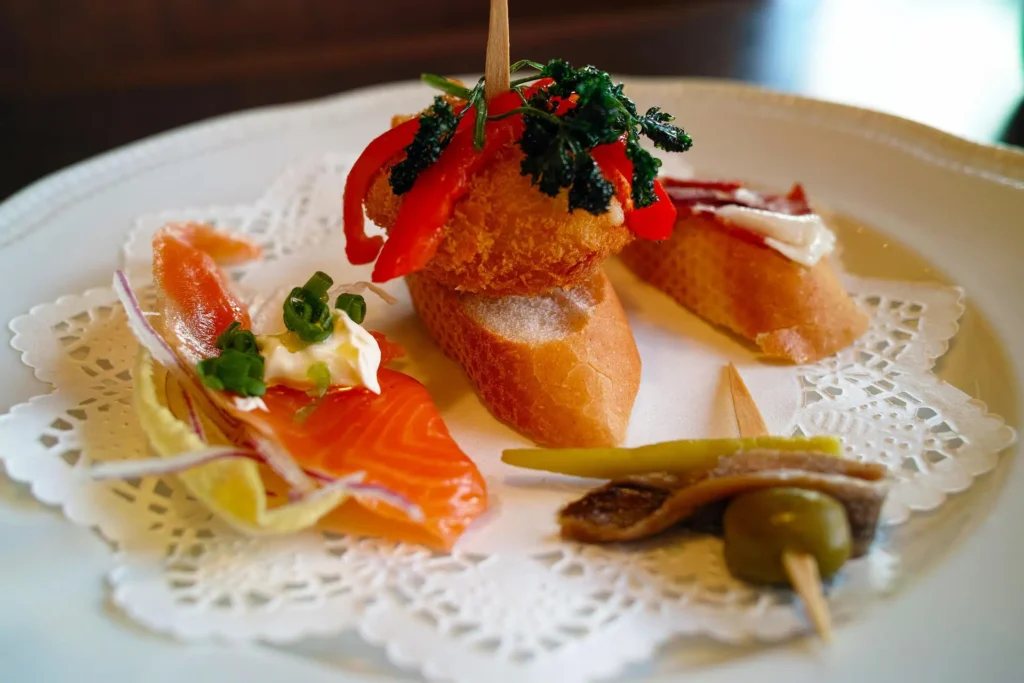
The Basque Country boasts one of the highest concentrations of Michelin-starred restaurants per capita in the world, and Bilbao is at the centre of this culinary revolution. The cornerstone of Bilbao’s food culture is the pintxo. Unlike traditional Spanish tapas, pintxos are elaborate, miniature culinary creations usually spiked onto a piece of bread with a toothpick. You do not sit down for a heavy meal; instead, you partake in a txikiteo (a pintxo crawl), hopping from bar to bar to sample different specialities.
Local Delicacies: Be sure to try Bacalao al Pil-Pil (salt cod fried in garlic and olive oil, creating an emulsion), Txipirones en su Tinta (baby squid cooked in their own ink), and Idiazabal (a smoky local sheep’s cheese).
Wining: Wash down your pintxos with Txakoli, a slightly sparkling, very dry white wine poured from a height to aerate it and enhance its flavour. If you prefer red wine, the world-famous Rioja wine region is located just south of Bilbao, meaning excellent, affordable Crianzas and Reservas flow freely in every local tavern.
Bilbao Accommodation on The Map
Nightlife
Bilbao’s nightlife is legendary and usually starts quite late. The evening begins in the Casco Viejo around 8:00 PM with wine and pintxos. As midnight approaches, the crowd shifts across the river to the Indautxu neighbourhood and the areas around Calle Mazarredo. Here, you will find a mix of sophisticated cocktail lounges, lively pubs, and energetic rock bars. For those looking to dance until the sun comes up, clubs like Fever and Sala Santana 27 host local and international DJs spinning everything from techno to indie pop.
Other Interesting and Useful Information
- Currency and Payments: Spain uses the Euro (EUR). While credit and debit cards are widely accepted almost everywhere (even for a 2 EUR coffee), it is wise to carry a few coins for small purchases or tips.
- Tipping: Tipping in Bilbao is not strictly obligatory, as a service charge is usually included. However, leaving the small change or rounding up the bill in a restaurant (typically 5 to 10 per cent) is a polite gesture for good service.
- Day Trips: Bilbao serves as an excellent basecamp for exploring the wider region. Consider renting a car or taking a bus to the stunning hermitage of San Juan de Gaztelugatxe (famous as Dragonstone in Game of Thrones), or take a 60-minute bus ride to the picturesque coastal city of San Sebastian.