
The Guggenheim Museum Bilbao
The Guggenheim Museum Bilbao is not just a building; it is a global icon of contemporary architecture and a catalyst for urban renewal. Opened in 1997, this magnificent institution transformed the industrial Spanish city of Bilbao into a premier cultural destination, a phenomenon now universally known as the “Bilbao Effect.” Housing some of the world’s most significant contemporary and modern art pieces, the museum offers an unforgettable experience for art enthusiasts and casual tourists alike.
Your eye is immediately drawn to the gleaming titanium exterior before you enter and see the world-class installations inside. Visiting this museum is a journey through the cutting edge of creativity which leaves the visitor with a new sense of the possibilities of human imagination.
This guide explores the architectural brilliance, the prime location, the must-see exhibits, and essential tips for planning your visit.
The Architectural Masterpiece of Frank Gehry
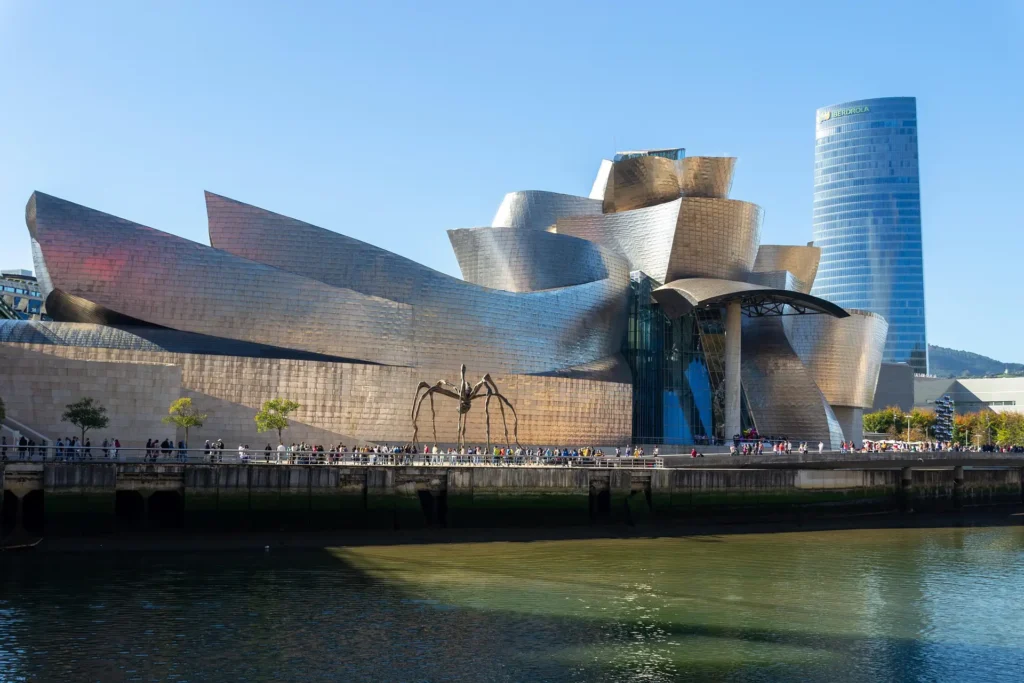
Designed by the legendary Canadian-American architect Frank Gehry, the architecture of the Guggenheim Museum Bilbao is often celebrated as one of the most important structures of the late 20th century. Gehry employed advanced aerospace software, specifically CATIA, to translate his visionary sweeping curves and complex geometric forms into a buildable reality. The result is a structure that defies traditional architectural conventions and embraces the Deconstructivist style.
The building’s exterior is famously clad in 33,000 remarkably thin titanium panels, which capture and reflect the changing light of the Basque sky. These shimmering metal scales are beautifully contrasted by local limestone and expansive glass walls that seamlessly connect the interior with the surrounding landscape. The building’s design subtly pays homage to Bilbao’s industrial and maritime heritage, with sweeping lines that evoke the imagery of a grand ship navigating the adjacent river.
Inside, the heart of the Guggenheim Museum Bilbao is the spectacular atrium. Soaring 55 meters high, this light-filled, cavernous space serves as the central hub connecting the museum’s three levels of galleries. The fluid, twisting interior walls create dynamic exhibition spaces that perfectly complement the large-scale contemporary artworks they house.
Location and Accessibility
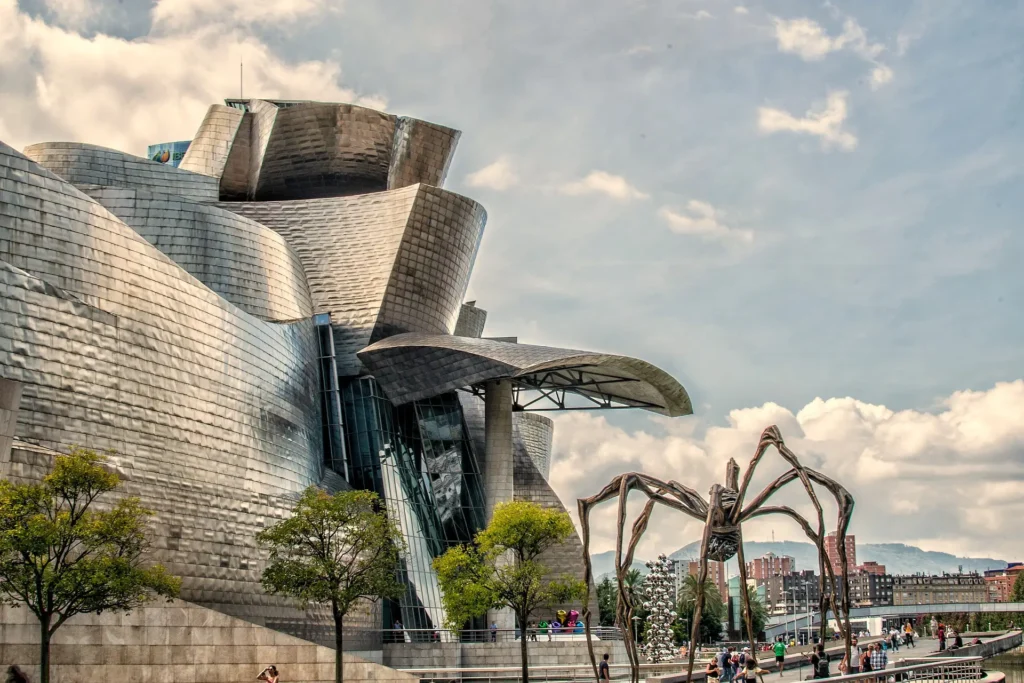
The Guggenheim Museum Bilbao is situated in the Abandoibarra area of Bilbao, Spain. Once a derelict industrial district composed of old wharves and warehouses, the area was entirely revitalised alongside the museum’s construction. The building sits gracefully on the banks of the Nervión River, beautifully integrating with the city’s waterfront and offering stunning panoramic views.
Getting to the museum is pretty easy due to Bilbao’s efficient public transportation system. Visitors can easily reach the destination via the Bilbao Metro (Moyua station is the closest), by taking the modern tram that runs right past the museum, or by utilizing various local bus routes. For those who prefer walking, the museum is highly accessible from the city center via wide, pedestrian-friendly promenades that line the river.
Tours & Tickets
Top 10 Most Famous Exhibits
The Guggenheim Bilbao hosts a rotating selection of temporary exhibitions alongside its permanent collection. Here are 10 of the most famous and iconic artworks you must see during your visit:

- Puppy by Jeff Koons: Standing guard outside the museum entrance, this towering 43-foot-tall West Highland White Terrier is famously crafted entirely from thousands of living, blooming flowers.
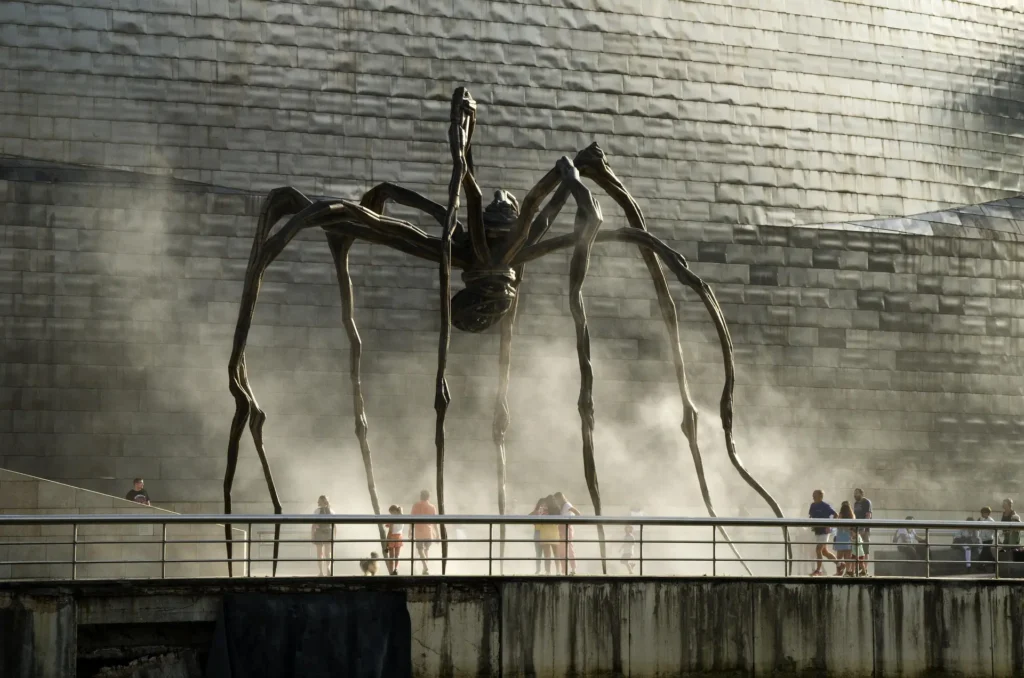
- Maman by Louise Bourgeois: Situated by the river, this massive, 30-foot-tall bronze spider sculpture serves as a complex tribute to the artist’s mother, symbolizing both fierce protection and fragility.
- The Matter of Time by Richard Serra: Dominating the largest gallery in the museum, this immersive installation consists of colossal, weathered steel spirals and ellipses that invite visitors to walk through and experience space in a disorienting new way.
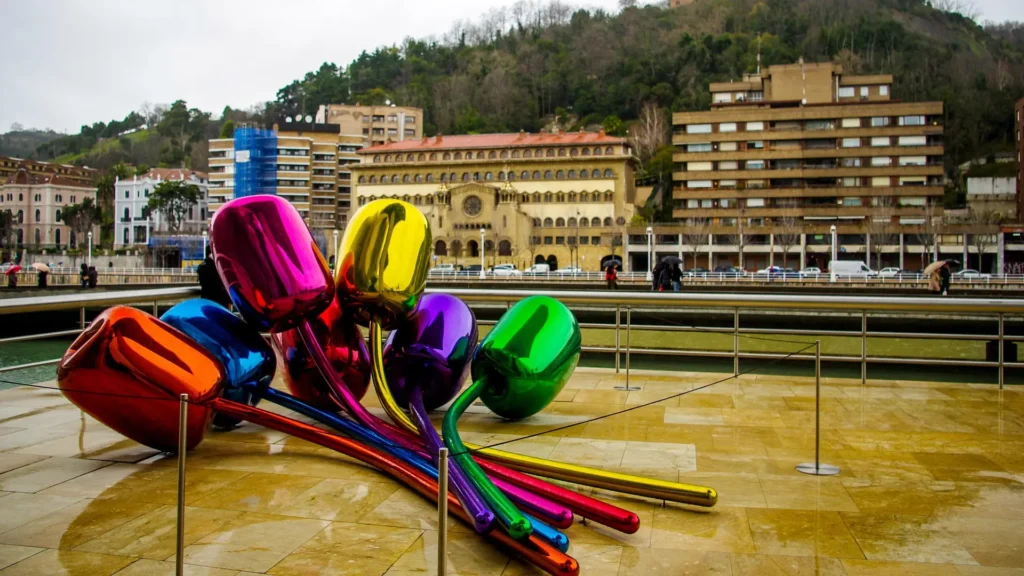
- Tulips by Jeff Koons: Located on an outdoor terrace, this vibrant bouquet of gigantic, multicolored stainless steel balloons reflects the surrounding architecture and sky with flawless precision.
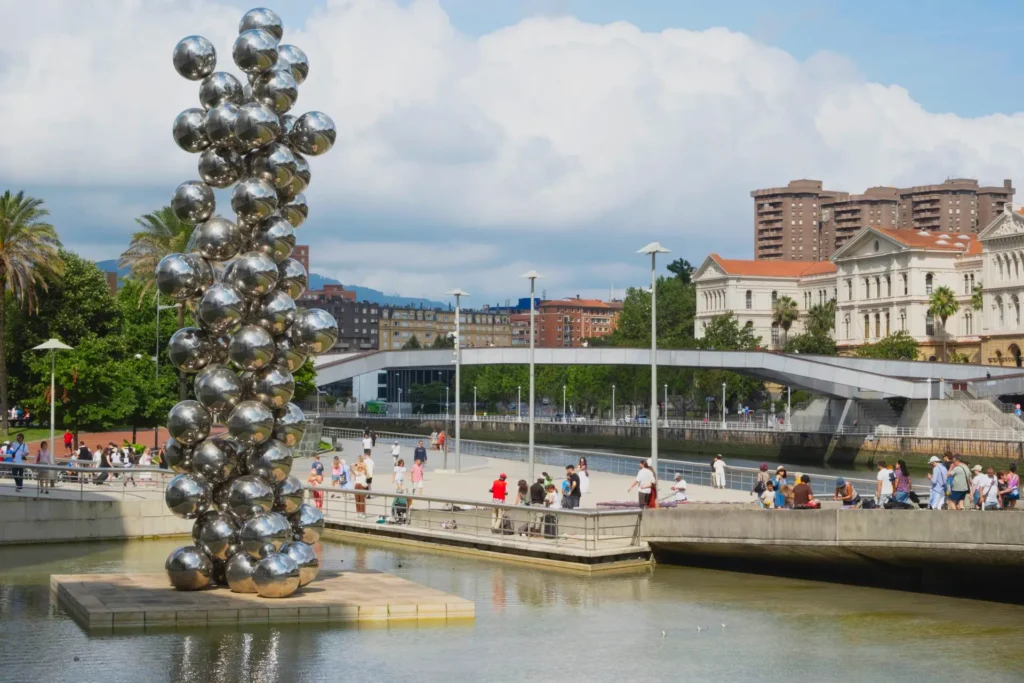
- Tall Tree & The Eye by Anish Kapoor: This mesmerizing outdoor installation features 73 highly polished stainless steel spheres stacked in a precarious-looking tower that infinitely reflects the environment.
- Installation for Bilbao by Jenny Holzer: Located in the museum’s atrium, this striking work features nine towering double-sided LED columns that continuously scroll enigmatic texts in English, Spanish, and Basque.
- Crucifixion by Antonio Saura: A powerful, expressive painting that dramatically reimagines the traditional religious scene with intense, chaotic brushstrokes and stark monochromatic tones.
- Man from Naples by Jean-Michel Basquiat: A chaotic, vibrant neo-expressionist canvas overflowing with the artist’s signature scribbles, words, and raw emotional energy.
- Sea Captain by Georg Baselitz: This striking painting features the artist’s trademark inverted subject matter, forcing the viewer to engage with the composition and brushwork rather than just the narrative.
- Untitled by Mark Rothko: A magnificent color field painting that immerses the viewer in deeply spiritual, luminous rectangles of hovering color.
Essential Visitor Information
To make the most of your trip to the Guggenheim Museum Bilbao, a bit of advance planning is highly recommended. The museum is generally open from Tuesday to Sunday, typically between 10:00 AM and 7:00 PM, though it does open on Mondays during the peak summer tourist season (July and August).
General admission tickets generally cost around 16 EUR to 18 EUR when purchased at the box office, but booking online in advance usually offers a small discount. Seniors and students receive reduced rates, while children under 18 can often enter for free. Audio guides are conveniently included with your ticket price and are accessible via an app on your smartphone, providing deep insights into both the architecture and the artwork.
For a complete sensory experience, consider dining at the museum. The on-site restaurant, Nerua, boasts a Michelin star and offers cutting-edge Basque gastronomy that matches the innovation of the art. Alternatively, the Bistró Guggenheim Bilbao provides delicious, high-quality meals in a more casual, yet stylish setting.
Summary of Key Points
- Architecture: Designed by Frank Gehry, featuring an iconic Deconstructivist design made of titanium, limestone, and glass.
- Location: Situated on the banks of the Nervión River in the revitalized Abandoibarra district of Bilbao, Spain.
- Art Highlights: Must-see works include Koons’s Puppy and Tulips, Bourgeois’s Maman, and Serra’s monumental The Matter of Time.
- Practical Tips: Book tickets online in advance to save money, check seasonal opening hours, and take advantage of the free digital audio guide.