
Timișoara
The Ultimate Travel Guide to Romania’s “Little Vienna”
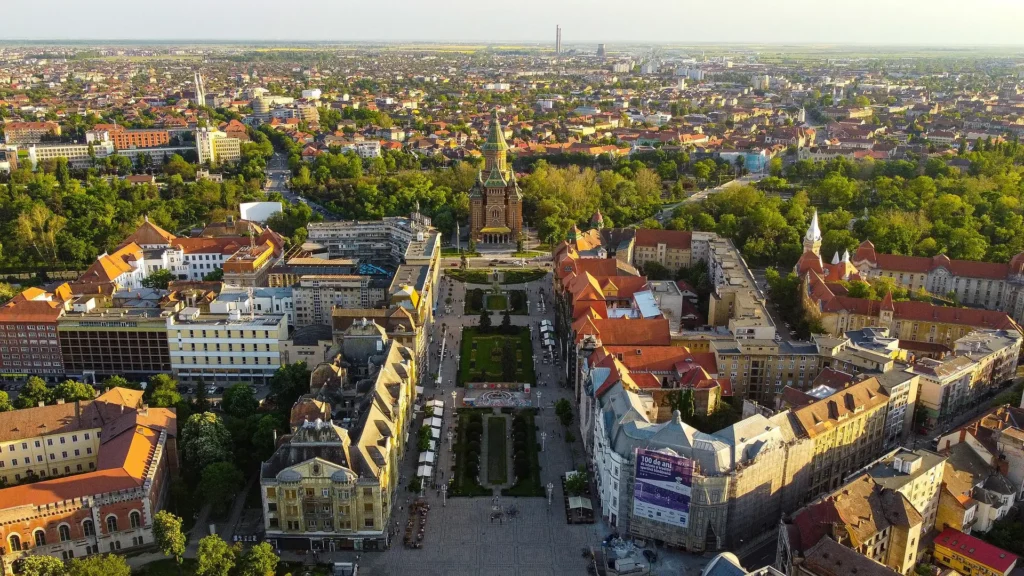
Timișoara is a delightful hidden gem located in the historical region of Banat in western Romania. Often referred to as “Little Vienna” due to its rich Habsburg history, this lively city blends centuries-old charm with a dynamic, modern energy. It famously holds the title of being the first mainland European city to introduce electric street lighting in 1884, and it served as the epicentre of the 1989 Romanian Revolution.
Visiting Timișoara
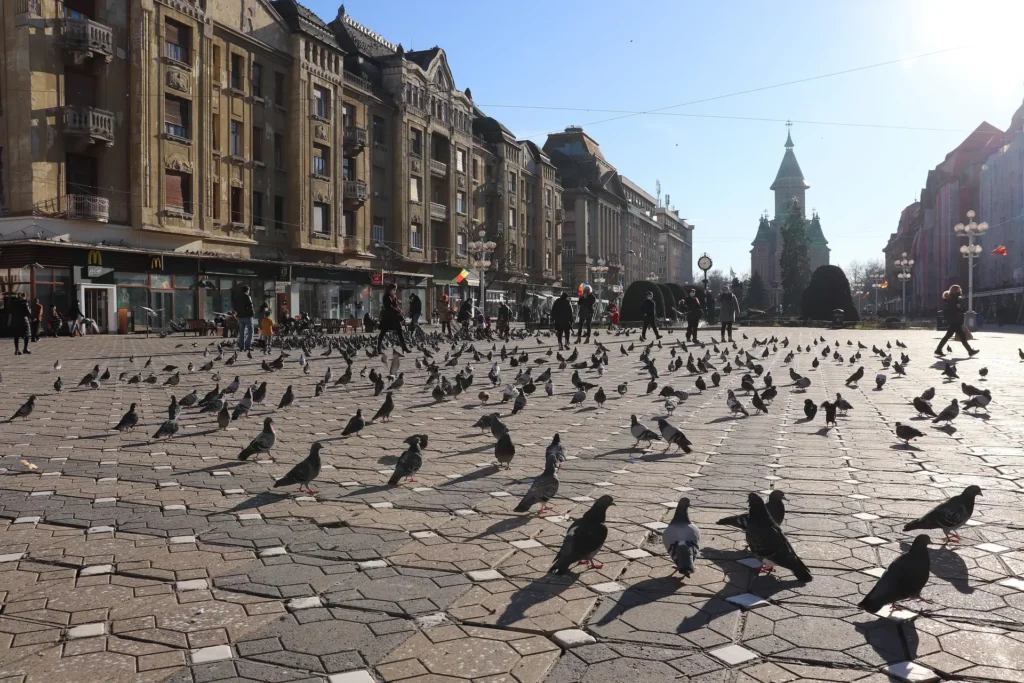
Timisoara is the third most populous city in Romania, with a population of approximately 250,000 residents within the city limits and over 300,000 in the broader metropolitan area. This creates a busy, cosmopolitan atmosphere that still manages to feel intimate and incredibly safe for tourists. Visiting Timișoara means stepping into a proudly multicultural environment where Romanian, German, Hungarian, and Serbian influences intermingle harmoniously. The city is highly welcoming to international visitors, with English widely spoken by the younger generations and in the hospitality sector.
Airports and Transport Options
Reaching Timișoara is highly convenient thanks to the Traian Vuia International Airport (TSR), located just 10 kilometres from the city center. The airport serves numerous low-cost and legacy carriers, providing direct flights from major European hubs like London, Munich, Milan, and Bucharest. An express bus (E4) runs regularly between the airport and the city center, costing less than 1 USD per ride, making airport transfers incredibly budget-friendly.
Once in the city, navigating is easy. Timișoara has an extensive public transport network (STPT) comprising trams, trolleybuses, and buses that efficiently connect all major neighborhoods. However, the historic center is heavily pedestrianized and best explored on foot, allowing you to easily wander between the major squares. For regional travel, Gara de Nord (the main railway station) offers domestic routes and international rail connections to Budapest and Vienna.
Top 10 Visitor Attractions
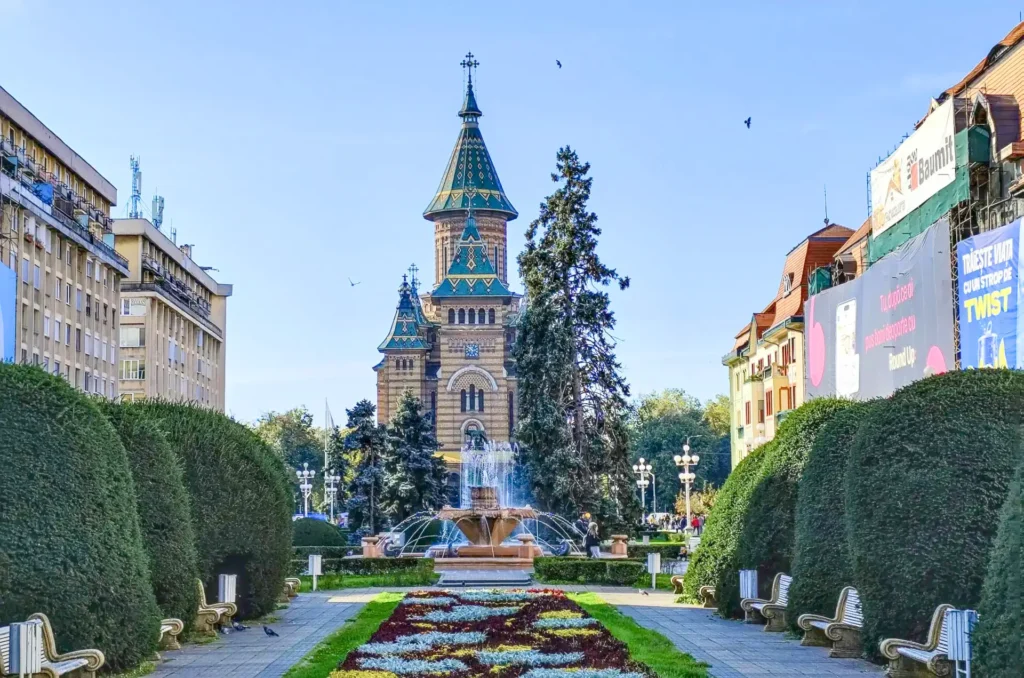
- Union Square (Piața Unirii): The most picturesque square in the city, famous for its colorful array of meticulously restored Baroque and Secessionist buildings.
- Victory Square (Piața Victoriei): A historic pedestrian promenade stretching from the Opera House to the Orthodox Cathedral, central to the 1989 anti-communist revolution.
- Timișoara Orthodox Cathedral: A majestic neo-Moldavian architectural masterpiece featuring dazzling mosaic roof tiles and a crypt housing a collection of rare religious art.
- St. George’s Roman Catholic Cathedral: An imposing 18th-century Baroque church anchoring the eastern side of Union Square with its stunning interior acoustics and ornate altars.
- The Memorial Museum of the 1989 Revolution: A poignant and highly educational exhibition detailing the city’s brave uprising that ultimately toppled the communist regime.
- Roses Park (Parcul Rozelor): A romantic, flower-filled green space perfect for leisurely afternoon strolls along the scenic banks of the Bega River.
- Maria Theresia Bastion: The largest remaining piece of the city’s old Austro-Hungarian defensive star-shaped walls, now creatively repurposed to host chic cafes and art galleries.
- Banat Village Museum: An immersive open-air ethnographic museum situated in the Green Forest, showcasing traditional Romanian peasant life and regional wooden architecture.
- Art Museum (Muzeul de Artă): Housed in the stunning Baroque Palace in Union Square, this museum features impressive European and Romanian visual art collections.
- Bega River Promenade: A vibrant waterway offering relaxing public boat rides, lively riverside dining terraces, and miles of picturesque walking and cycling paths.
Tours and Tickets
A Tapestry of Culture and Architecture
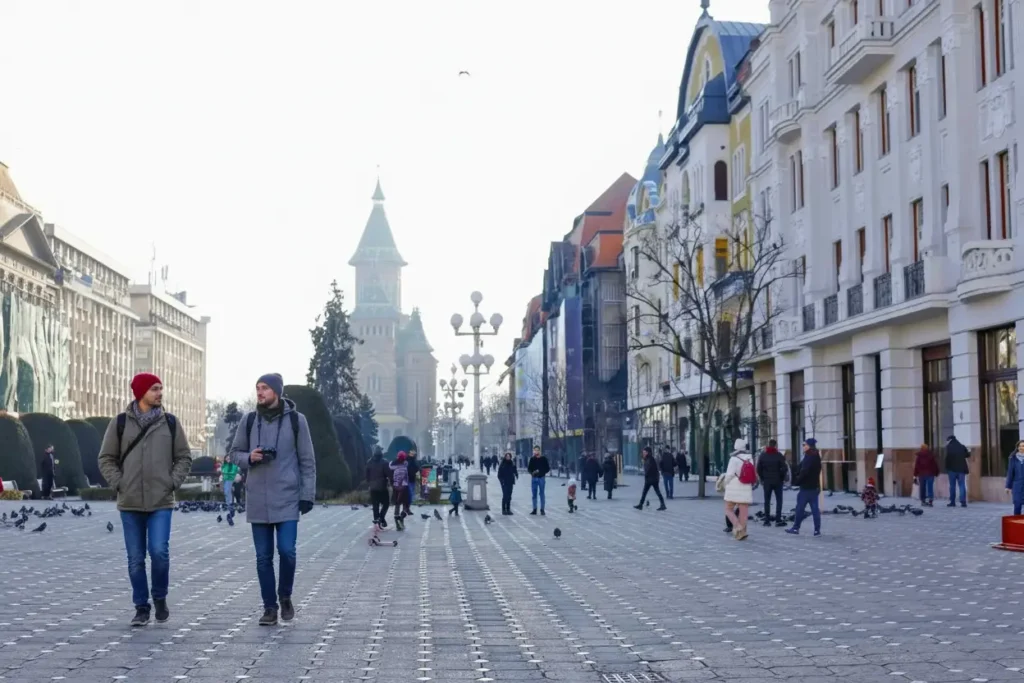
Timișoara’s architecture is a stunning visual timeline of its complex history, earning it the prestigious title of European Capital of Culture in 2023. Walking through the center, you will be surrounded by a spectacular array of architectural styles, most notably Art Nouveau, Secessionist, and Baroque. The city’s cultural scene is just as diverse as its facades, featuring three state theaters operating in three different languages: Romanian, German, and Hungarian. Throughout the year, the city hosts a plethora of cultural events, including international film festivals, jazz concerts, and vibrant open-air theater performances.
Food, Wining, and Dining
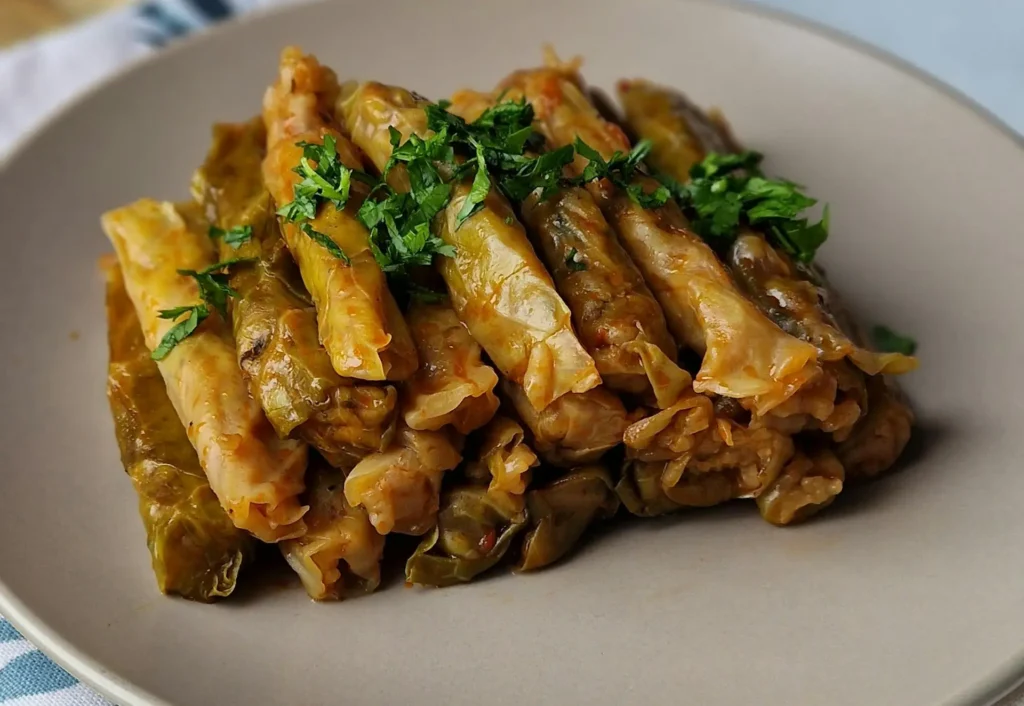
The culinary scene in Timișoara is a delightful reflection of its multicultural Banat heritage. Traditional Romanian staples like sarmale (minced meat stuffed cabbage rolls) and mici (grilled skinless sausages) are elevated by central European influences like hearty Hungarian goulash and Austrian-style schnitzels. For fine dining, the city center is packed with upscale bistros offering modern interpretations of traditional recipes alongside international cuisine.
No culinary tour of Timișoara is complete without sampling the regional wines. The nearby Recaș winery, one of Romania’s most famous vineyards, produces exceptional native varieties like Fetească Neagră alongside excellent international blends. Dining out is generally very affordable; a high-quality three-course meal for two with local wine at a mid-range restaurant typically costs around 30 to 45 USD.
Timișoara Accommodation on The Map
Nightlife
Thanks to its status as a major university center, Timișoara possesses a vibrant and energetic nightlife that caters to all tastes. The historic centre around Union Square is packed with chic cocktail bars, craft beer pubs, and intimate speakeasies that buzz with activity every night of the week. During the warmer months, the nightlife naturally spills out onto the banks of the Bega River, where massive open-air terraces and floating clubs host local DJs and live bands. For a more bohemian, student-led atmosphere, the Complexul Studențesc (Student Campus) area offers cheap drinks, lively pubs, and all-night dancing.
Useful Information for Travellers
- Currency: Although Romania is in the EU, it has not yet adopted the Euro currency. Romania uses the Romanian Leu (RON). While card payments are widely accepted almost everywhere, it is always a good idea to carry a small amount of cash for minor purchases or tipping.
- Best Time to Visit: Spring (May to June) and early Autumn (September to October) offer the most pleasant weather for sightseeing and outdoor dining.
- Connectivity: Timișoara offers some of the fastest broadband internet speeds in Europe, and free Wi-Fi is ubiquitous in cafes, restaurants, and public squares.