
Guide to Picasso’s ‘Guernica’

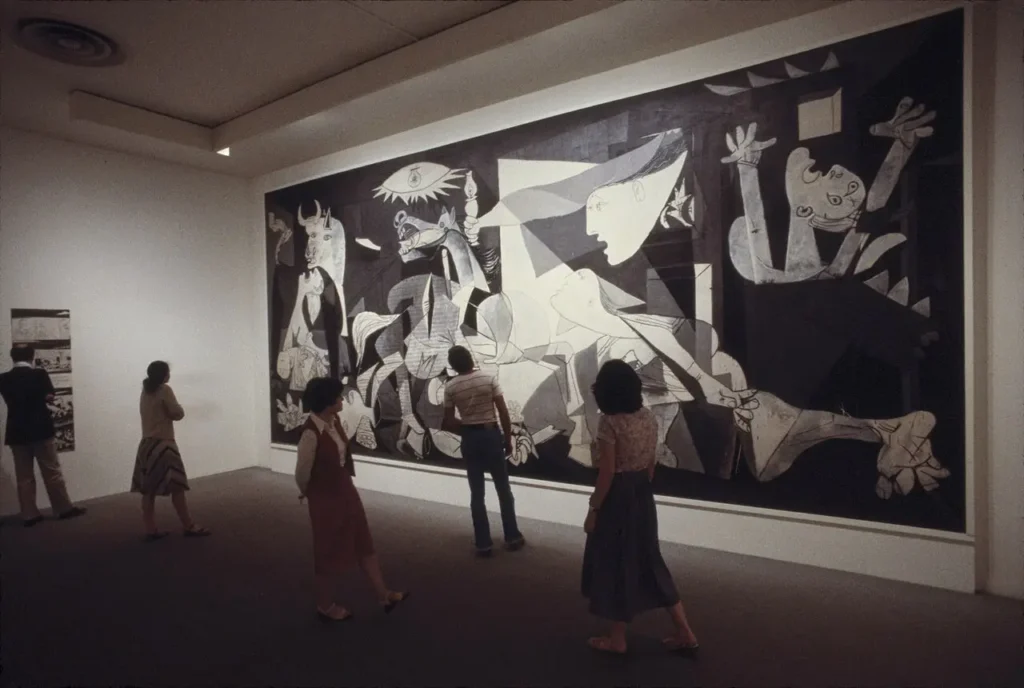
Pablo Picasso’s Guernica is widely considered one of the most powerful and moving anti-war paintings in history. Created in 1937, this monumental canvas captures the devastating realities of conflict and the brutal suffering of innocent civilians. As a pinnacle of modern art, it continues to draw millions of visitors, spark intense academic debate, and serve as a universal symbol of peace.
Understanding Guernica requires looking beyond its chaotic surface to explore the deep historical context, the artistic innovations of Cubism, and the controversies that have shadowed the masterpiece for decades. This comprehensive guide breaks down everything you need to know about Picasso’s iconic mural.
Quick Facts About Guernica
| Feature | Detail |
|---|---|
| Artist | Pablo Picasso |
| Year Created | 1937 |
| Medium | Oil on canvas |
| Dimensions | 3.49 meters x 7.76 meters (11 ft 5 in x 25 ft 6 in) |
| Style | Cubism / Surrealism |
| Current Location | Museo Nacional Centro de Arte Reina Sofía, Madrid, Spain |
The Tragic History Behind the Masterpiece
The genesis of Guernica lies in the brutal realities of the Spanish Civil War. In early 1937, the Spanish Republican government commissioned Pablo Picasso to create a large mural for the Spanish Pavilion at the upcoming Paris International Exposition. Initially, Picasso struggled with inspiration and lacked a clear subject for the prestigious commission.
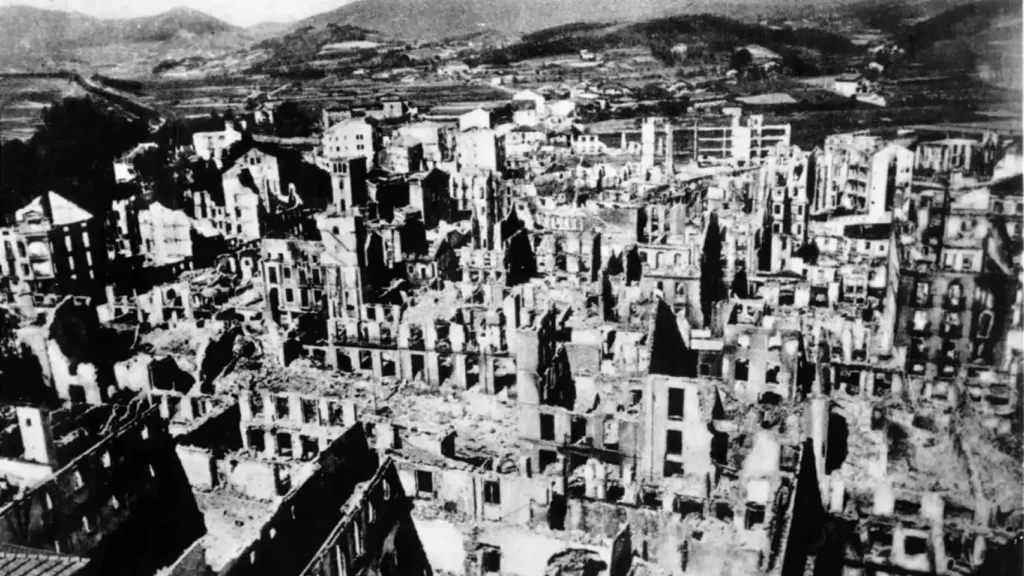
Everything changed on April 26, 1937. At the request of Spanish Nationalist forces led by General Francisco Franco, Nazi German and Fascist Italian warplanes carried out a devastating aerial bombing on the Basque town of Guernica. The town was caught completely off guard, and the indiscriminate bombing killed hundreds of defenseless civilians, mostly women and children.
When reports and horrific photographs of the massacre reached Paris, Picasso was deeply moved and outraged. He immediately abandoned his original sketches and began working feverishly on a new concept. Within just 35 days, he completed the massive painting, transforming a specific historical atrocity into a timeless condemnation of war and fascist brutality.
Style, Size, and Composition
One of the most striking aspects of Guernica is its sheer, monumental scale. Measuring an immense 3.49 meters tall by 7.76 meters wide, the painting engulfs the viewer, forcing them to confront the life-sized horrors depicted on the canvas. The immense size was necessary for its original purpose as a pavilion mural, but it also amplifies the emotional weight of the tragedy.
Aesthetically, Picasso employed a unique blend of Synthetic Cubism and Surrealism. The painting is entirely devoid of color, utilizing a stark monochrome palette of black, white, and varying shades of gray. This deliberate choice mimics the look of the black-and-white newspaper photography that first brought the atrocities to the world’s attention. It also strips the scene of any romanticized warmth, leaving only the cold, ash-like reality of death and destruction.
The composition is chaotic yet highly structured, organized into a central triangle that peaks at an illuminated oil lamp. The fragmented, overlapping shapes typical of Cubism are used here to convey the literal dismemberment of bodies and the shattering of a peaceful society.
What Is Guernica About? Decoding the Symbolism
While Picasso famously refused to assign fixed meanings to the elements in his painting, stating that “the bull is a bull and the horse is a horse,” art historians have identified several recurring motifs. At its core, Guernica is about the innocent victims of political violence.
Key figures and symbols in the painting include:
- The Grieving Mother: On the far left, a woman wails in agony while holding the lifeless body of her child, a direct reference to the traditional Pietà imagery.
- The Bull: Standing over the mother, the bull is often interpreted as a symbol of brutality, darkness, or perhaps fascism itself. Others see it as representing the spirit of Spain.
- The Agonized Horse: Dominating the center, the impaled, shrieking horse is widely seen as representing the innocent people of Spain who were suffering under the conflict.
- The Lightbulb: Above the horse’s head is a blazing lightbulb shaped like an eye. In Spanish, the word for bulb (bombilla) sounds remarkably similar to bomb (bomba), leading many to view it as a symbol of technological warfare and the “evil eye” of the fascist bombers.
- The Fallen Soldier: At the bottom, a dismembered soldier holds a broken sword from which a single, fragile flower grows, a faint glimmer of hope amidst absolute despair.
The Controversies Surrounding the Painting
Guernica has been a magnet for controversy and political tension since its unveiling. Initially, the painting received mixed reviews at the 1937 Paris Expo, with some critics finding it too inaccessible and abstract for a piece of political propaganda. Following the defeat of the Spanish Republic, Picasso mandated that the painting could not return to Spain until democracy was fully restored.
For decades, the painting found a safe haven at the Museum of Modern Art (MoMA) in New York City, where it inspired generations of post-war artists. In 1974, an art dealer named Tony Shafrazi vandalized the painting by spray-painting “KILL LIES ALL” across it in red, protesting the Vietnam War. Fortunately, the canvas was heavily varnished, and the paint was easily removed without causing permanent damage.
Another notable controversy occurred in 2003 at the United Nations headquarters in New York. A prominent tapestry reproduction of Guernica hangs outside the Security Council chamber. When US Secretary of State Colin Powell made his case for the invasion of Iraq, UN officials covered the anti-war tapestry with a blue curtain, sparking international outrage over the attempted censorship of the artwork’s message.
Where is Guernica on Display Today?
Following the death of dictator Francisco Franco in 1975 and the subsequent establishment of a democratic constitution in Spain, the conditions of Picasso’s will were finally met. In a highly secretive and heavily guarded operation, Guernica was flown to Spain in 1981, marking a deeply emotional homecoming for the Spanish people.
Today, Guernica is the crown jewel of the Museo Nacional Centro de Arte Reina Sofía in Madrid. It is displayed in a dedicated gallery alongside numerous preliminary sketches and photographs taken by Dora Maar, which document the painting’s creation process. It remains one of the most protected artworks in the world, displayed behind bulletproof glass in a climate-controlled environment.
Summary
Guernica remains Pablo Picasso’s most consequential and celebrated masterwork. Born from the ashes of a tragic bombing during the Spanish Civil War, this massive monochrome canvas utilizes the fragmented style of Cubism to depict the universal horrors of conflict. From its symbolic depictions of suffering animals and humans to its dramatic exile and eventual return to a democratic Spain, Guernica transcends its 1937 origins. Today, safely housed in Madrid’s Reina Sofía museum, it continues to challenge viewers and stands as an enduring, monumental plea for peace.